Most homeowners never think about what their sewer line is made of — until it fails. The material determines the failure mode, the repair options, and the urgency. Here's what runs under Buffalo Grove-area homes.
The standard from the early-to-mid 1900s. Durable as a material, but every 3–4 foot joint is a root entry point and a future offset. Fails by root intrusion and joint separation. Very common in older suburbs.
Common in mid-century homes, especially under the house itself. Fails from the inside out: scale and rust narrow the pipe until flow chokes, and the bottom can corrode through entirely. Camera footage of cast iron often looks like a rusty cave.
Used briefly post-WWII as a cheap alternative. It's essentially tar-soaked paper pipe, and it deforms, blisters, and collapses with age. If your home dates to that era and has never had the line replaced, assume Orangeburg until a camera proves otherwise — it cannot be lined and must be replaced.
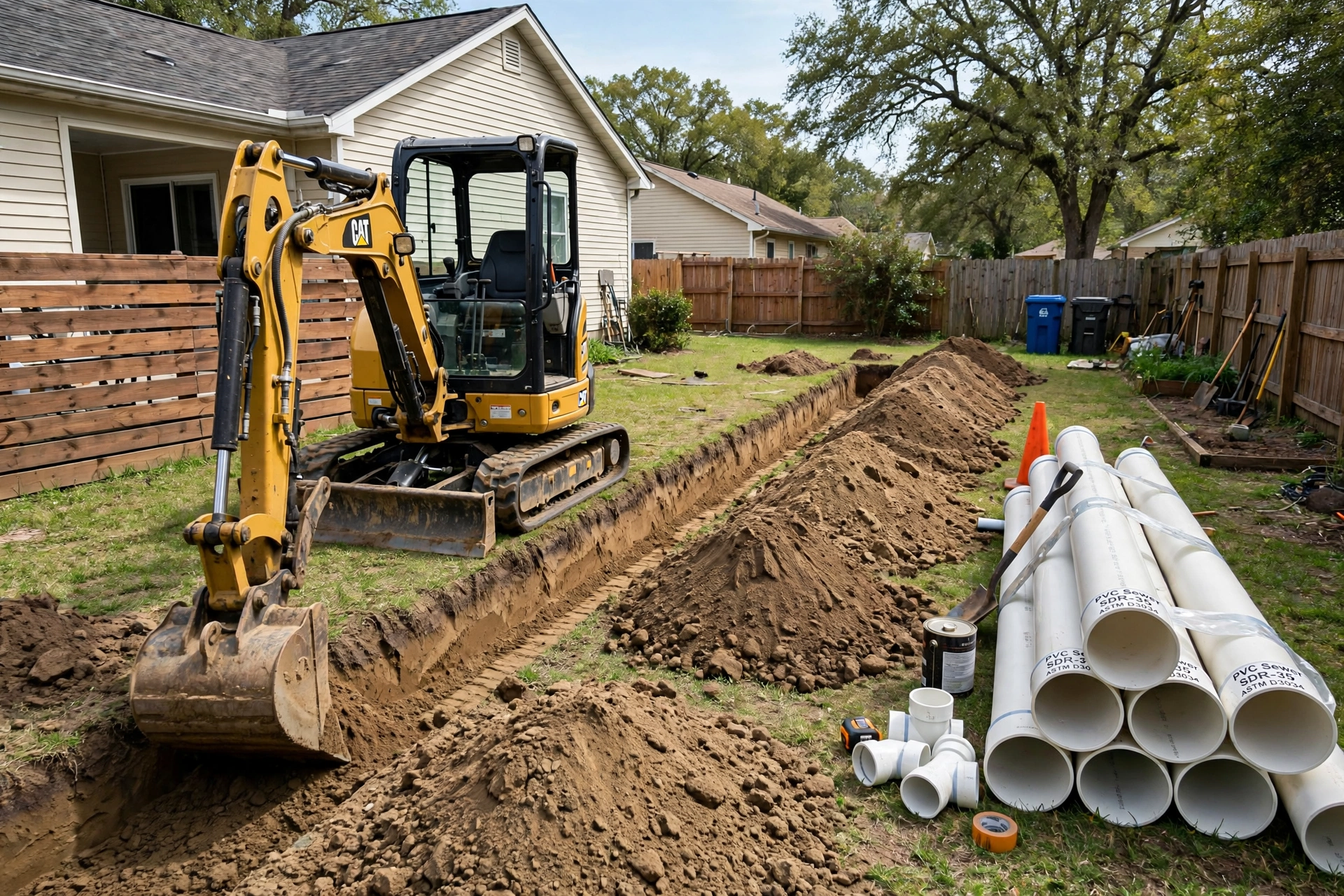
The modern standard: smooth, jointless runs, root-resistant, 100-year material life. Fails mainly from bad installation — poor bedding, improper slope, or crushed sections from heavy equipment. Even 'new' pipe deserves a camera look if drains misbehave.
Lining works on clay and cast iron that still hold their shape — but not on collapsed Orangeburg. Pipe bursting handles most materials but needs the line's path to be viable. Replacement is universal but most disruptive. The camera inspection identifies your material in the first minute and narrows the options from there.
If your home is more than 40 years old and you've never seen your sewer line on camera, you're operating on hope. A $150–$400 inspection tells you the material, the condition, and the timeline. Call (833) 713-2101 and find out what you're standing on.
Free consultation · Upfront pricing · Buffalo Grove & nearby suburbs
Call (833) 713-2101Questions about your sewer line in Buffalo Grove? Talk to a specialist now.
