
Sewer Line Repair in Buffalo Grove, IL
Sewer Line Repair Specialists connects Buffalo Grove homeowners with local sewer line professionals — camera diagnosis, trenchless repair, and 24/7 emergency response. Sewer Line Repair Buffalo Grove IL starts with one call: (833) 713-2101.
- 24/7 emergency line
- Northwest suburb specialists
- Free to call
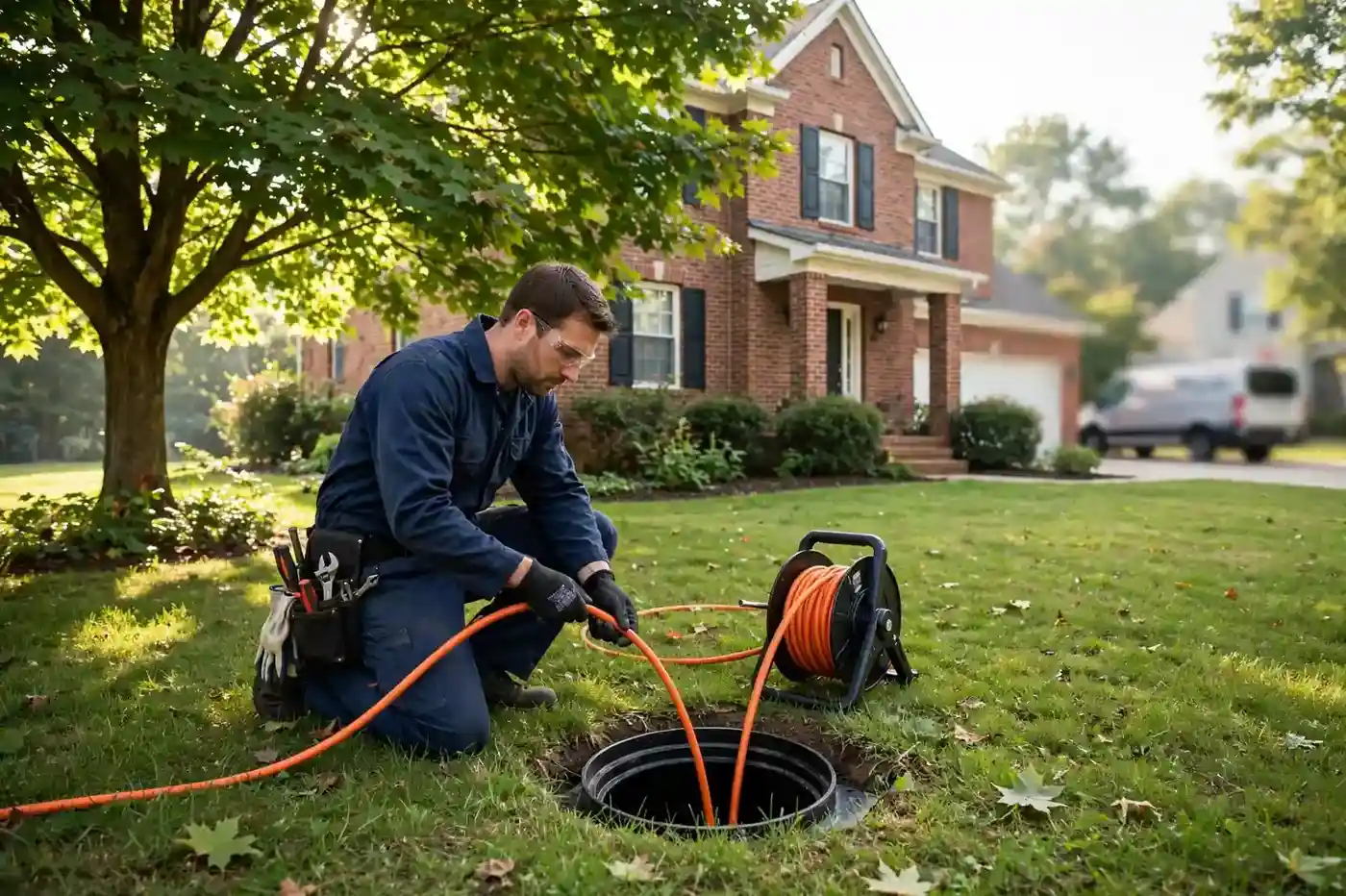
Under Buffalo Grove's quiet streets runs a sewer system older than most of the homes above it. In Old Buffalo Grove, original 1958–1970 clay tile laterals have carried wastewater for more than six decades — past the lifespan their joints were designed for. In the 1960s and 70s tracts of Mill Creek, Strathmore, and the neighboring towns of Deerfield, Palatine, and Arlington Heights, clay tile and Orangeburg pipe are hitting end-of-life in the same decade, under the same mature trees that have spent fifty years hunting for moisture at every joint.
That combination — aging pipe plus aggressive roots plus glacial-till clay soil that shifts with every freeze-thaw cycle — is why sewer trouble in the northwest suburbs follows such a predictable script. First the drains slow a little. Then a toilet gurgles when the washer runs. Then, usually after a spring thaw or a heavy summer storm, the basement floor drain becomes a fountain. Sewer Line Repair Specialists exists for that moment: one call to (833) 713-2101 connects Buffalo Grove homeowners with a local sewer professional who diagnoses with a camera first and fixes with the least disruptive method that will actually last.
The service area covers Buffalo Grove's neighborhoods — from the condos of Cambridge-on-the-Lake and Hidden Lake Village to the estates of Long Grove, the townhomes of Woodstone and Town Place, and the 1990s streets of Canterbury Fields and Rolling Hills — plus nearby Arlington Heights, Deerfield, Lincolnshire, Mundelein, Northbrook, Palatine, Prospect Heights, Vernon Hills, and Wheeling. Whether the job is a midnight backup, a planned trenchless lining, or a camera inspection before buying a home, the process starts the same way: a conversation about what the drains are doing, and a plan based on what the camera shows.
Sewer Problems Buffalo Grove Homeowners Actually Face
Root intrusion at clay tile joints
The signature failure of the northwest suburbs. Clay tile joints from the 1950s–70s separate a fraction of an inch with every freeze-thaw cycle, and the mature oaks and maples overhead send root hairs into each opening. Within a few seasons the hairs become mats, the mats become blockages, and the line that drained fine for decades backs up every eighteen months. Camera inspection finds the entry joints; cutting clears them and lining seals them.
Orangeburg pipe reaching end of life
Bituminous fiber pipe — installed across the postwar boom from 1945 to 1972 — was never meant to see 60 years. It ovals under soil pressure, blisters from the inside, and eventually collapses into a flattened channel. Deerfield, Palatine, and Arlington Heights tracts built in the 60s and 70s still carry Orangeburg laterals, and when the camera shows the deformation, pipe bursting is the standard replacement.
Cast-iron scale and corrosion
The house sewer inside many Buffalo Grove homes is cast iron, and cast iron fails from the inside out. Scale roughens the interior until paper and waste snag; corrosion thins the bottom of the pipe until it disappears entirely. Descaling restores flow temporarily, but paper-thin pipe calls for lining over a sound shape — or replacement when the shape is gone.
Bellies and settled sections
Where glacial-till clay settled unevenly under the trench, the pipe sags into a belly that holds standing water and solids. Bellies do not improve with cleaning — the jetter passes and the debris resettles. The camera measures the sag; shallow bellies can sometimes be lined, deep ones need the grade rebuilt by replacement.
Infiltration from high water tables
Cracked joints do not just let sewage out — they let groundwater in. Near Diamond Lake, the Des Plaines corridor, Buffalo Creek's headwaters, and the pond-adjacent communities, spring melt pours into breached laterals and surcharges lines that were fine all winter. Infiltration calls for joint sealing and, in finished basements, backwater-valve protection.
Frozen sump discharge lines
The 1990s homes of Canterbury Fields and Rolling Hills run sump discharge lines that freeze solid in January cold snaps, sending water back toward the foundation instead of away from it. Rerouting, deeper burial, or freeze-resistant discharge assemblies solve a problem that repeats every hard winter until it is addressed.
The Buffalo Grove Sewer Calendar: When Trouble Strikes
Sewer failures in the northwest suburbs are not random — they follow the seasons almost as reliably as the weather itself. Knowing when each threat peaks helps Buffalo Grove homeowners act before the basement drain tells them.
Spring: thaw and infiltration
March and April are infiltration season. As snowmelt and spring rain saturate the glacial-till clay, groundwater pours into every cracked clay-tile joint — near Buffalo Creek's headwaters, the Des Plaines corridor, Diamond Lake, and the pond-adjacent neighborhoods, lines that behaved all winter suddenly surcharge. If the basement is finished, this is when a backwater valve earns its keep: it is the difference between a wet spring and a sewage spring.
Summer: root season
Roots do their growing from late May through August, and the mature oaks and maples of Old Buffalo Grove, Deerfield, and Arlington Heights spend those months probing every clay-tile joint for moisture. The classic pattern is a line that drained fine in April backing up in August — eighteen months after the last cutting. A camera check in early summer finds the entry joints before they become mats.
Fall: the pre-winter inspection
October is the smartest month to look at a sewer line. A camera inspection before the ground freezes catches the summer's root growth, the settlement from a dry August, and any joint the spring infiltration exposed — while trenchless crews can still work comfortably and scheduling is easy. It is also the time to confirm sump discharge lines are routed where January cannot freeze them.
Winter: freeze protection
January cold snaps are what freeze sump discharge lines solid in the 1990s homes of Canterbury Fields and Rolling Hills, sending water back toward the foundation. Inside, holiday guests and cold-weather cooking push grease and volume through cast-iron house sewers at their most brittle. Keep the thermostat steady, keep grease out of the drains, and call (833) 713-2101 at the first gurgle — frozen lines do not improve on their own.
Sewer Line Services in Buffalo Grove, IL
Commercial Sewer Services
Sewer care for offices, retail, and industrial sites.
Learn moreEmergency Sewer Repair
Backups and overflows handled around the clock.
Learn morePipe Bursting
Breaks old pipe while pulling in new HDPE.
Learn morePipe Lining
Epoxy liner renews pipe from the inside.
Learn moreSewer Camera Inspection
Camera survey pinpoints every defect underground.
Learn moreSewer Leak Detection
Acoustic and camera tech find exact break points.
Learn moreSewer Line Cleaning
Hydro jetting clears grease, roots, and scale.
Learn moreSewer Line Installation
New laterals for builds and septic conversions.
Learn moreSewer Line Replacement
Brand-new lateral when repair stops making sense.
Learn moreSewer Maintenance
Scheduled cleaning keeps lines flowing year-round.
Learn moreTree Root Removal
Cuts intruding roots, then treats the joints.
Learn moreTrenchless Sewer Repair
Renew laterals with minimal digging.
Learn moreFrom First Call to Fixed Line
- 1Call (833) 713-2101 — any hour
Describe what the drains are doing: which fixtures, when it started, and the home's age. A local specialist answers, asks the right questions, and tells you what to do — or not do — right now.
- 2Get a camera diagnosis
The technician inspects the line with a camera and locates every defect from above. You see the problem on the monitor and receive a written findings report — evidence, not guesswork.
- 3Fix it with the right method
Clearing, lining, bursting, or replacement: the recommendation matches what the camera showed, and the work is scheduled around your life. Most residential jobs finish in a day.
Why Buffalo Grove Calls (833) 713-2101
A referral service, not a sales call
Sewer Line Repair Specialists connects callers with independent local sewer professionals. The model is simple: describe the problem once, get connected with someone who serves your area — no phone trees, no pressure.
Camera-first, every time
Repairs are scoped from video evidence. The camera shows the material, the defects, and their exact locations before anyone recommends lining, bursting, or digging — which is how you avoid paying for the wrong fix.
Trenchless options where they fit
Pipe lining and pipe bursting resolve most residential failures without an open trench. When the camera says trenchless fits, the yard, driveway, and landscaping stay intact.
Built for northwest-suburb pipe
Clay tile, Orangeburg, cast iron, and the root loads of mature Chicago-suburb trees — the local specialists work on this housing stock every day, from Old Buffalo Grove's 1958 ranches to Long Grove's estate laterals.
One number, day and night
Sewer failures ignore business hours. The line at (833) 713-2101 is answered around the clock, so a midnight backup gets a plan at midnight — not Monday morning.
Sewer Line Repair Across Buffalo Grove and the Northwest Suburbs
Sewer work is local work: the pipe under a 1958 ranch in Old Buffalo Grove has almost nothing in common with the shared building sewer of a Cambridge-on-the-Lake condo or a 300-foot estate lateral in Long Grove. Service across Buffalo Grove, IL 60089 and the surrounding northwest suburbs is organized around those differences — the housing era, the pipe material it implies, and the soil and trees above it.
Select your community below for the local picture: verified ZIP, housing stock, the pipe materials typically found there, and how each service adapts to the area's conditions.
Every area page also lists the services most often requested there — because the right fix in Lincolnshire's root zones is rarely the right fix for a 1990s PVC lateral in Rolling Hills.
Arlington Heights
Pre-1970 clay tile under mature trees.
Learn moreCambridge-on-the-Lake
1970s condos with aging cast-iron stacks.
Learn moreCanterbury Fields
1990s PVC; settlement and sump issues.
Learn moreDeerfield
Clay tile and Orangeburg under dense canopy.
Learn moreHidden Lake Village
1980s condos, shared sewers, HOA coordination.
Learn moreHighland Grove
Clay-to-PVC transition joints; sectional lining.
Learn moreLincolnshire
Half-acre lots; tree ordinance favors trenchless.
Learn moreLong Grove
Estate lots, septic conversions, long laterals.
Learn moreMill Creek
1970s clay tile; textbook root intrusion.
Learn moreMundelein
Clay-tile core plus newer PVC subdivisions.
Learn moreNorthbrook
Teardown rebuilds on 1960s clay tile.
Learn moreOak Creek
Condos with shared building sewers.
Learn moreOld Buffalo Grove
Village's oldest sewer stock, 1958-70.
Learn morePalatine
1960s-70s clay tile across subdivisions.
Learn moreProspect Heights
Condos plus high river water tables.
Learn moreRolling Hills
Mid-90s PVC; penetration settlements.
Learn moreStrathmore
Mixed foundations, shallow sewer routing.
Learn moreTown Place
Townhomes, high water table, shared lines.
Learn moreVernon Hills
Commercial grease plus residential clay tile.
Learn moreWheeling
Industrial sewer market: grease and jetting.
Learn moreWoodlands of Fiore
1992 condos entering maintenance age.
Learn moreWoodstone
1980s townhomes with aging shared laterals.
Learn moreSewer Line Guides for Northwest Suburb Homeowners
7 Signs Your Sewer Line Is Failing
Seven warning signs of sewer failure.
Learn moreTree Roots in Sewer Lines: Prevention Guide
Why roots invade and prevention steps.
Learn moreTrenchless vs. Traditional Sewer Repair Compared
Trenchless vs digging: honest comparison.
Learn moreSewer Line Repair vs. Replacement: How to Decide
When to repair, line, or replace.
Learn moreSewage Backup in Your Home: What to Do First
First-ten-minutes backup checklist.
Learn moreSewer Line Maintenance Tips for Northwest Suburb Homes
Habits that keep laterals flowing.
Learn moreFrequently Asked Questions
How does Sewer Line Repair Specialists work?
It is a referral service: you call (833) 713-2101, describe the sewer problem and where the property is, and you are connected with an independent local sewer professional serving Buffalo Grove and the northwest suburbs. The specialist who arrives handles diagnosis and repair directly.
What areas do you serve?
Buffalo Grove, IL 60089 — including Old Buffalo Grove, Cambridge-on-the-Lake, Canterbury Fields, Hidden Lake Village, Highland Grove, Mill Creek, Oak Creek, Rolling Hills, Strathmore, Town Place, Woodlands of Fiore, and Woodstone — plus Arlington Heights, Deerfield, Lincolnshire, Long Grove, Mundelein, Northbrook, Palatine, Prospect Heights, Vernon Hills, and Wheeling.
Do you offer 24/7 emergency service?
Yes. The line at (833) 713-2101 is answered around the clock. Sewage backups, overflows, and sudden line failures are prioritized, and the first call focuses on stopping the damage before discussing permanent repairs.
Will I need to dig up my yard?
Often not. Most residential failures in the area qualify for trenchless methods — pipe lining or pipe bursting — which work through small access points. A camera inspection determines whether your line is a candidate before anyone commits to a method.
How much does sewer line repair cost?
It depends on the method, the line's length and depth, access, and soil conditions — which is why every serious quote starts with a camera inspection. Call (833) 713-2101 to describe the situation and get the diagnostic scope for your property.
Do tree roots really cause most sewer problems here?
In much of the service area, yes. Clay tile joints from the 1950s–70s separate over decades of freeze-thaw, and the mature oaks and maples of the northwest suburbs find every opening. Root cutting plus joint repair — lining or managed cutting — is the standard answer.
Can you handle commercial properties?
Yes — restaurants, offices, retail, and industrial properties get scheduled service: camera inspection, hydro jetting, grease-line clearing, and lateral repair planned around operating hours with written documentation.
What should I do during a sewage backup right now?
Stop using water immediately — no flushing, laundry, or showers — keep people and pets away from the affected area, and call (833) 713-2101. Do not use chemical drain cleaners; they will not clear a main-line backup.
My Buffalo Grove home was built in the 1960s and the drains work fine — do I still need a camera inspection?
Yes — that is exactly when an inspection pays for itself. A 1960s lateral is clay tile or Orangeburg at 60+ years, past the design life of both materials. The camera finds joint separation, root entry, and ovaling years before the first backup, while lining is still an option. After a collapse the options narrow. One inspection now buys a map of the line's remaining life.
Does homeowners insurance cover sewer line repairs in Illinois?
Standard homeowners policies almost never cover the lateral itself — wear, root intrusion, and ground settlement are excluded as maintenance issues. Many Illinois carriers offer a sewer-backup rider that covers interior damage from a backup, usually with a modest limit. Call (833) 713-2101 after a backup either way: the camera report documents the cause, which is what any claim needs.
How long does a trenchless pipe lining actually last?
A properly installed epoxy liner is engineered for a 50-year service life — it creates a seamless, jointless pipe inside the old one that roots cannot penetrate and scale cannot grip. That assumes the host pipe still has its shape: lining a collapsed or badly bellied line is not an option, which is why the camera inspection comes first.
We are buying a home in Buffalo Grove — should we order a sewer inspection?
Yes, especially for anything built before 1980. A general home inspection does not scope the sewer lateral, yet a collapsed Orangeburg line or root-choked clay tile can hide under a flawless kitchen. In Old Buffalo Grove, Mill Creek, and the 1960s–70s tracts of Palatine and Deerfield, smart buyers add a camera inspection as a purchase contingency — local sellers expect the request.
Sewer Line Problems Don’t Wait. Neither Should You.
Call now and reach a local sewer line specialist serving Buffalo Grove, IL and nearby northwest suburbs — 24/7.
(833) 713-2101Free to call · No obligation · 24/7 emergency line