
Sewage Backup? Here's What to Do First
The first minutes of a sewage backup determine how bad it gets. A calm, ordered sequence for Buffalo Grove homeowners — first, next, and after.
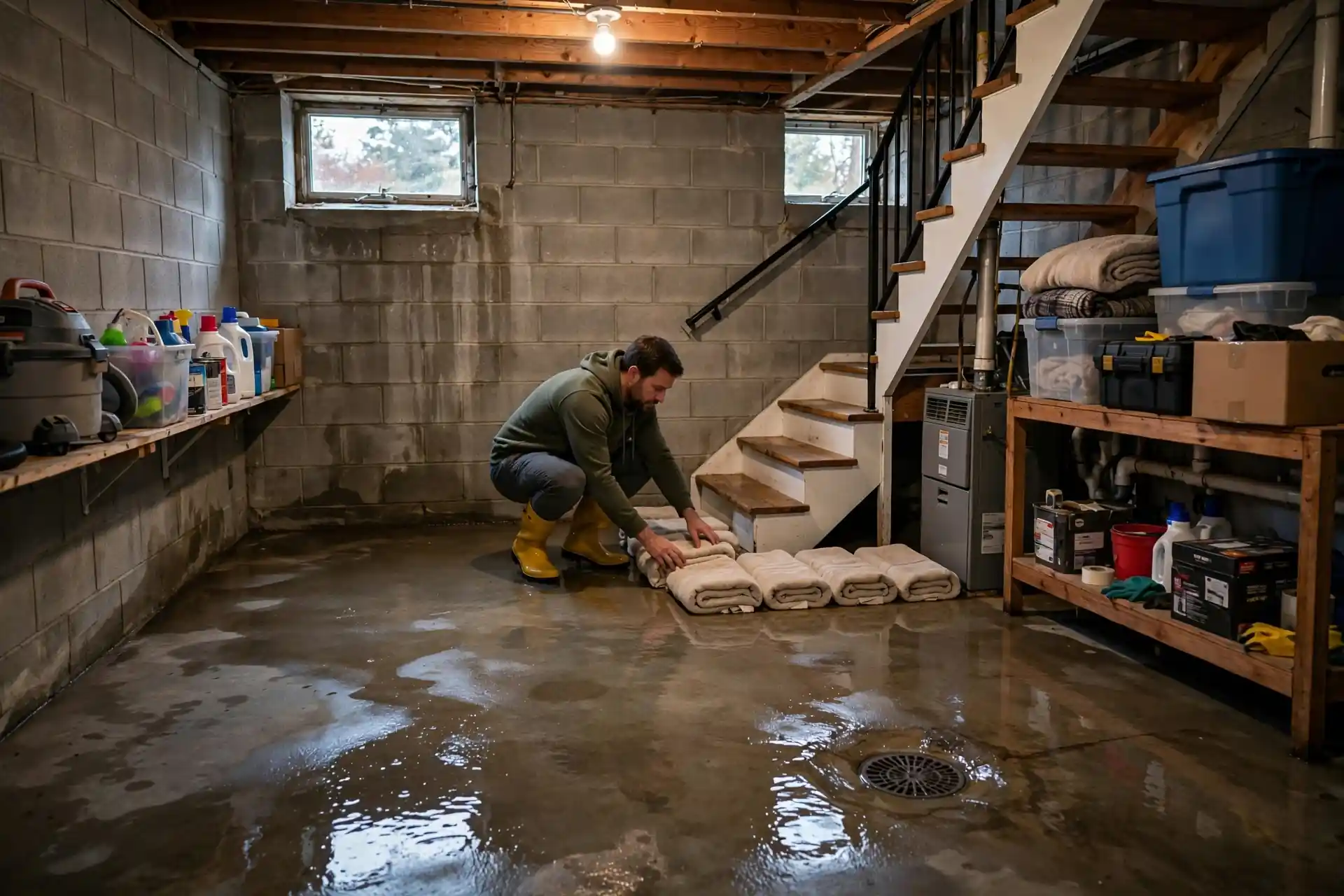
In short: If sewage is backing up in your Buffalo Grove, IL home: stop using all water, keep people and pets away, protect valuables if safe, document everything, and call (833) 713-2101. Do not use chemical drain cleaners or wade through wastewater.
A sewage backup is one of the few home emergencies where the first ten minutes matter as much as the professional response that follows. Every gallon sent down a drain during a backup comes back into the house. Every moment of delay lets contamination spread further into flooring, walls, and belongings. And a few common instincts — pouring in drain cleaner, wading in to save the rug — make things actively worse.
This guide is the sequence to follow: what to do in the first five minutes, what to do in the first hour, what never to do, and how the aftermath — cleanup, insurance, prevention — unfolds. Read it now, while the drains are behaving; in the moment, you will be glad the sequence is already in your head.
The first five minutes: stop the inflow
First: stop using water everywhere in the house. No flushing, no laundry, no dishwasher, no showers — tell everyone under the roof, plainly, that the plumbing is off-limits until further notice. A backup means the lateral cannot carry water away; everything you add comes back through the lowest drain. This single action does more to limit damage than anything else you will do.
Next: protect people, then property. Keep children and pets completely away from the wastewater — sewage carries bacteria, viruses, and parasites, and it is not a 'dirty water' situation but a biohazard one. If you can do it safely without walking through wastewater, move valuables, electronics, and porous items (boxes, rugs, upholstered furniture) out of the affected area; anything sewage touches is generally not salvageable, but limiting the contact zone limits the loss. Put on rubber boots and gloves if you have them before entering the area at all.
The first hour: document, then call
Before anything is moved or cleaned, document. Photograph and video the backup: water lines on walls, the entry point (which drain it is coming from), damaged items in place, the extent of spread. Capture wide shots for context and close-ups for detail. Write down the timeline — when you noticed it, what you did, in what order. This documentation is the foundation of any insurance claim and the record your contractor needs; it takes five minutes and is nearly impossible to reconstruct later.
Then call for professional help: (833) 713-2101 for emergency sewer repair. Describe what you see — which fixtures are affected, whether it is happening in dry weather or during rain, where your cleanout is — so the crew arrives with the right equipment. While waiting, do not run water 'to test' whether it is still backing up; you already know the answer, and the test just adds wastewater. If sewage is near the electrical panel, furnace, or water heater, say so on the call and do not approach those appliances.
What NOT to do
The do-not list is as important as the do list. Do not pour chemical drain cleaners into a backed-up line: they will not clear a main-line blockage, they generate heat and fumes in standing wastewater, they can damage pipes and fixtures, and they create a chemical hazard for the technician who eventually works on the line. Do not use a plunger aggressively on a sewage backup — plunging pressurizes the system and can force wastewater out of other fixtures.
Do not wade through sewage to reach electrical panels, gas valves, or appliances — electrocution and contamination are both in play, and no appliance is worth either. Do not run the washing machine or dishwasher to 'get it over with.' Do not assume it will drain on its own if you wait; a true backup does not self-resolve, and waiting lets contamination wick further into drywall and subflooring. And do not start tearing out flooring or drywall before documenting — the photos come first, the demolition comes after the adjuster and contractor have seen the original state.
Cleanup and sanitizing: doing it right
Once the line is flowing again, the remaining job is restoration, and sewage cleanup has rules. Anything porous that contacted wastewater — carpet and pad, upholstered furniture, cardboard, drywall below the water line — generally must be removed and discarded; it cannot be reliably sanitized. Hard, non-porous surfaces (concrete, tile, sealed wood) can be cleaned and then disinfected with appropriate products, following dwell-time directions rather than a quick wipe.
Protect yourself during cleanup: gloves, boots, eye protection, and a mask are the minimum, and the space needs ventilation. If the affected area is large, the contamination extensive, or HVAC ductwork was involved, bring in a professional restoration company — this is what they are for, and your insurer expects professional remediation for significant events. Keep every receipt: plumber, restoration crew, dumpster, replaced materials. The paper trail is the claim.
Insurance: the call you make next
After the immediate crisis, call your insurance agent or carrier — promptly, since policies require timely notice. Whether the damage is covered depends on your policy: standard homeowners policies exclude sewer backup, but a water backup endorsement — which many Illinois homeowners carry — covers backup damage up to its limit. If you have never added the endorsement, this is the expensive moment you discover the gap; add it afterward regardless.
The adjuster will want exactly what you documented in the first hour: photos, video, timeline, and the contractor's diagnosis of the cause. The service invoice matters — it establishes that the loss was a sudden backup event and identifies the cause (roots, collapse, grease), which the policy language keys off. Our guide to sewer backup insurance coverage walks through endorsements, exclusions, and claim mechanics in detail — read it once the house is dry.
Preventing the next one
A backup is also a diagnosis waiting to happen. The camera inspection after the emergency shows why it occurred — root mass, grease plug, collapsed section, or municipal surcharge — and each cause has a prevention playbook. Roots get cutting plus treatment, or lining of the invaded joints. Grease gets a jetting schedule and household habit changes. Collapse gets replacement. A municipal surcharge pattern gets a backwater valve, which lets wastewater out but will not let the surcharged main push back in.
Do not skip this step. Lines that back up once and are merely cleared back up again — the defect is still down there, maturing. The least expensive backup is the one that never recurs, and recurrence prevention starts with knowing the cause. Schedule the follow-up inspection while the memory is fresh and the motivation is high; future-you, dry and unhurried, will approve.
Frequently Asked Questions
Is it safe to clean up a small sewage backup myself?
A very small, contained backup (a toilet overflow limited to a tile floor, caught immediately) can be handled with proper protection — gloves, boots, eye protection, thorough disinfection. Anything beyond that — multiple fixtures, carpeted areas, drywall contact, or uncertainty about the extent — calls for professional remediation. When in doubt, treat it as a job for pros; sewage is a biohazard, not just a mess.
How long does it take to fix a sewage backup?
The emergency visit — clearing the blockage and restoring flow — is typically a same-day job measured in hours. The permanent fix for the underlying cause is scheduled separately: days for a lining or spot repair, longer for full replacement. Cleanup and drying of the affected area runs on its own timeline, often several days with proper equipment.
Will my homeowner's insurance cover the damage?
It depends on your endorsements. Standard policies exclude sewer backup; a water backup endorsement covers it up to the policy's limit. The endorsement covers the damage the water caused, generally not the pipe repair itself. Document everything from the first hour and notify your carrier promptly — then check our insurance coverage guide for the details.
The backup stopped on its own. Do I still need to do anything?
Yes — a backup that 'resolves itself' usually means the blockage shifted, not that it left. The underlying defect (roots, grease, partial collapse) remains and will recur, typically worse. Get a camera inspection to find the cause while the line is cooperating; it is far cheaper than waiting for the next backup to choose its own timing.
Sewer Line Problems Don’t Wait. Neither Should You.
Call now and reach a local sewer line specialist serving Buffalo Grove, IL and nearby northwest suburbs — 24/7.
(833) 713-2101Free to call · No obligation · 24/7 emergency line