
Sewer Line Cleaning in Buffalo Grove, IL
Slow drains, gurgling toilets, recurring clogs — professional sewer line cleaning in Buffalo Grove, IL restores full flow with hydro jetting and root cutting. Call (833) 713-2101.
- 24/7 emergency line
- Northwest suburb specialists
- Free to call
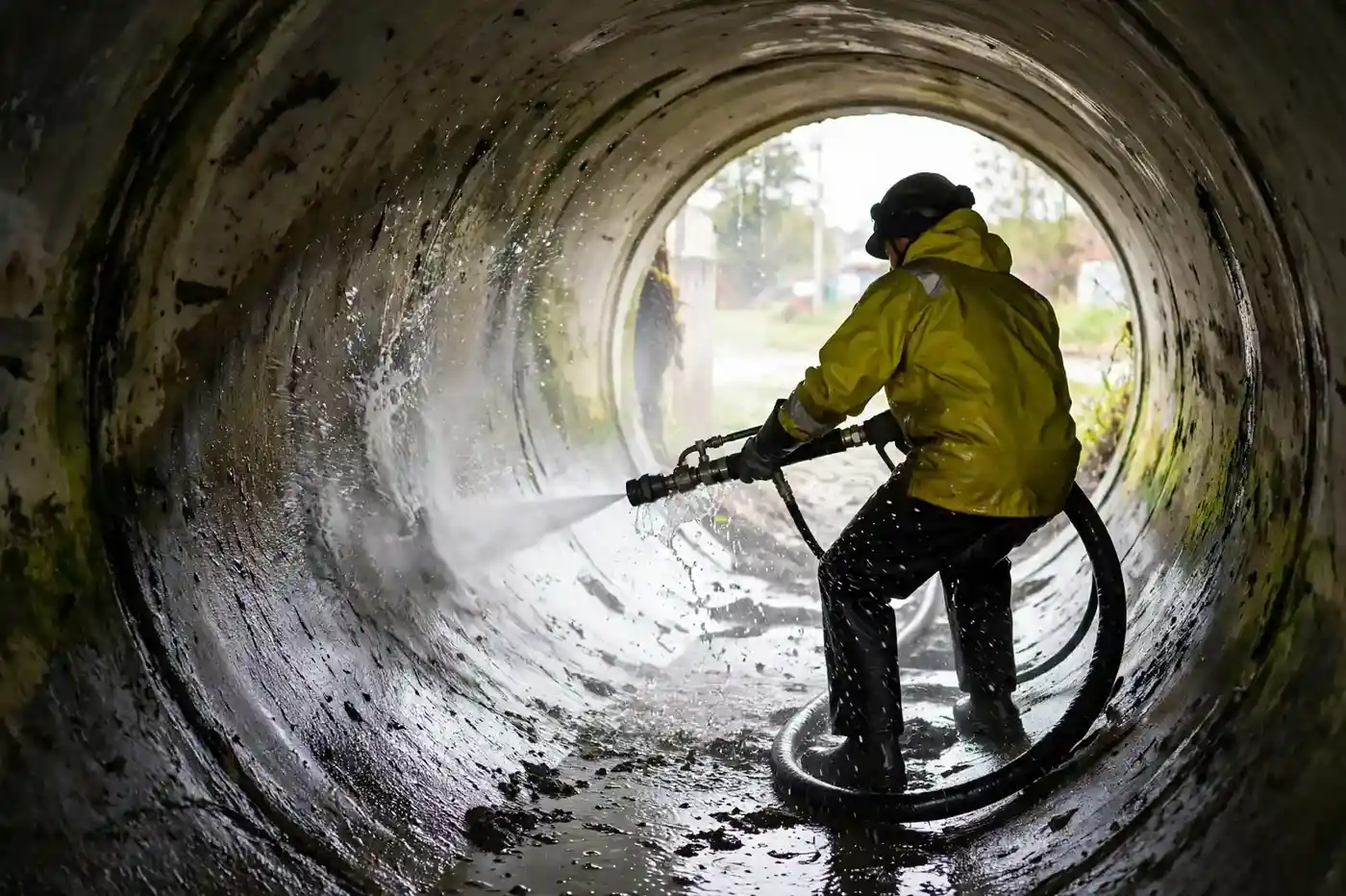
In short: Sewer line cleaning in Buffalo Grove, IL uses hydro jetting and mechanical root cutting to clear grease, scale, roots, and debris from the lateral — restoring diameter without digging. Call (833) 713-2101 when drains slow down or backups repeat.
Most sewer lines do not fail suddenly — they narrow gradually. Grease coats the walls, scale roughens cast iron, roots finger through joints, and each layer steals a little more diameter until the line that handled the household for years suddenly cannot handle a laundry day. Professional cleaning reverses that narrowing: hydro jetting scours the walls back to full diameter, and root cutters shear intrusions flush with the joint.
In Buffalo Grove, cleaning is both a fix and a diagnostic. A line that has never been cleaned in 30 years often just needs cleaning; a line that needs cleaning every six months is telling you about a structural defect the camera should see. The technician cleans first, then recommends the camera when the pattern suggests it. Call (833) 713-2101 — slow drains are the simplest problem to solve early.
Signs You Need Sewer Line Cleaning
Drains slowing throughout the house
When sinks, tubs, and toilets all drain slower than they used to, buildup — not a single clog — is narrowing the shared line.
Gurgling sounds from toilets and drains
Gurgling means air is trapped by a partial blockage. It is the line's early warning, well before a backup.
Needing the plunger more and more often
Escalating plunger use means the restriction is growing downstream, beyond the reach of household tools.
Water backing into tubs when toilets flush
Cross-fixture backup is the signature of a main-line restriction — the classic cleaning call.
Sewage odors from drains
Buildup traps waste and gas against the walls. Cleaning removes the material the odor is coming from.
Previous root cutting more than a year ago
Cut roots regrow. On root-prone clay tile laterals, scheduled cleaning is maintenance, not failure.
What Causes Sewer Line Cleaning Problems
Buildup has four authors in the northwest suburbs. Kitchen grease — the leading one — coats pipe walls and hardens, especially in lines that run long and flat. Cast-iron scale roughens interiors until paper and waste snag. Tree roots enter at every separated clay-tile joint and mat into flow-blocking masses. And in the pond-adjacent and low-lying areas, fine silt washes in through cracked joints and settles into bellies.
Cleaning removes all four, but it does not repair the joint the roots entered through or the belly the silt settled into. That is why the post-cleaning recommendation matters: clean yearly and monitor, or camera now and fix the defect.
How Sewer Line Cleaning Works, Step by Step
- 1Call with the symptoms
Call (833) 713-2101 and describe which fixtures are slow and for how long. The technician brings the right heads for grease, roots, or scale.
- 2Access and assessment
The crew opens the best cleanout and assesses the blockage — a quick camera look first when the history suggests structural issues.
- 3Mechanical clearing
Cable machines or root-cutting heads break through the immediate restriction and restore flow.
- 4Hydro jetting
High-pressure water with the right nozzle scours grease, scale, and debris from the full circumference, restoring the pipe's original diameter.
- 5Verification and recommendation
Flow is tested at every fixture, and the technician tells you honestly whether this was maintenance or a symptom — and whether a camera inspection is warranted.
Equipment and Materials
- Sectional and drum drain-cleaning cable machines
- Root-cutting and saw-blade heads
- Trailer and cart hydro jetters with specialty nozzles
- Descaling chain flails for cast iron
- Sewer cameras for post-cleaning verification
- Wet vacuums and containment for clean work areas
Safety on Every Visit
Cleaning equipment is powerful and treated with respect: cables are fed with proper gloves and eye protection, jetting pressure is matched to the pipe's material and condition, and the crew never runs a machine against a fully unknown blockage without assessing it first. Work areas are contained, and wastewater is never left standing on floors or yards.
Sewer Line Cleaning in Buffalo Grove's Northwest Suburbs
Cleaning demand is written into the housing stock. Deerfield's root-loaded clay tile and Orangeburg, Palatine's 1960–79 subdivisions, and Arlington Heights' mature-tree laterals make root cutting a seasonal rhythm. Wheeling's restaurants and the Hawthorn-area food businesses need scheduled grease jetting. The 1970s condo communities — Cambridge-on-the-Lake, Hidden Lake Village, Oak Creek — run shared building sewers that reward scheduled hydro-jetting programs over emergency calls. And everywhere in the northwest suburbs, spring is cleaning season: roots that grew all summer get cut before fall rains.
Related Sewer Services
Frequently Asked Questions
How often should a sewer line be cleaned?
It depends on the line: root-prone clay tile often benefits from annual or biennial cleaning, while sound PVC may go years. The technician will recommend an interval based on what the cleaning reveals.
Is hydro jetting safe for old pipes?
When matched to the pipe's material and condition, yes — pressure and nozzle are selected for clay, cast iron, Orangeburg, or PVC. The technician assesses the line before jetting, and a camera check comes first when the pipe's condition is unknown.
Will cleaning fix recurring root blockages permanently?
Cleaning removes the roots but not the joint they entered through. If roots return quickly, the camera inspection will show whether lining or bursting the affected section is the lasting fix.
Do you clean commercial grease lines?
Yes — restaurants, food courts, and commercial kitchens are core hydro-jetting work, scheduled around operating hours. Grease programs prevent the emergency backups that close dining rooms.
What is the difference between snaking and jetting?
Snaking punches through a blockage; jetting scours the full pipe wall back to original diameter. Jetting cleans, snaking clears — the technician chooses based on what the line needs.
Can cleaning be done in winter?
Yes. Crews work year-round in the Chicago suburbs, with equipment winterized for freezing temperatures. Frozen ground does not stop a cleaning the way it complicates excavation.
Sewer Line Problems Don’t Wait. Neither Should You.
Call now and reach a local sewer line specialist serving Buffalo Grove, IL and nearby northwest suburbs — 24/7.
(833) 713-2101Free to call · No obligation · 24/7 emergency line