
Sewer Line Repair in Cambridge-on-the-Lake, IL
Local sewer line service for Cambridge-on-the-Lake, Illinois 60089 — camera inspection, trenchless repair, and 24/7 emergency response from specialists who know this area's pipe. Call (833) 713-2101.
- 24/7 emergency line
- Northwest suburb specialists
- Free to call
In short: Sewer line repair in Cambridge-on-the-Lake, Buffalo Grove, IL 60089 means building-system work: 1970–74 brick condos with 50-year-old cast-iron stacks and shared sewers to the city main. Call (833) 713-2101 — every job starts with a camera inspection and HOA coordination.
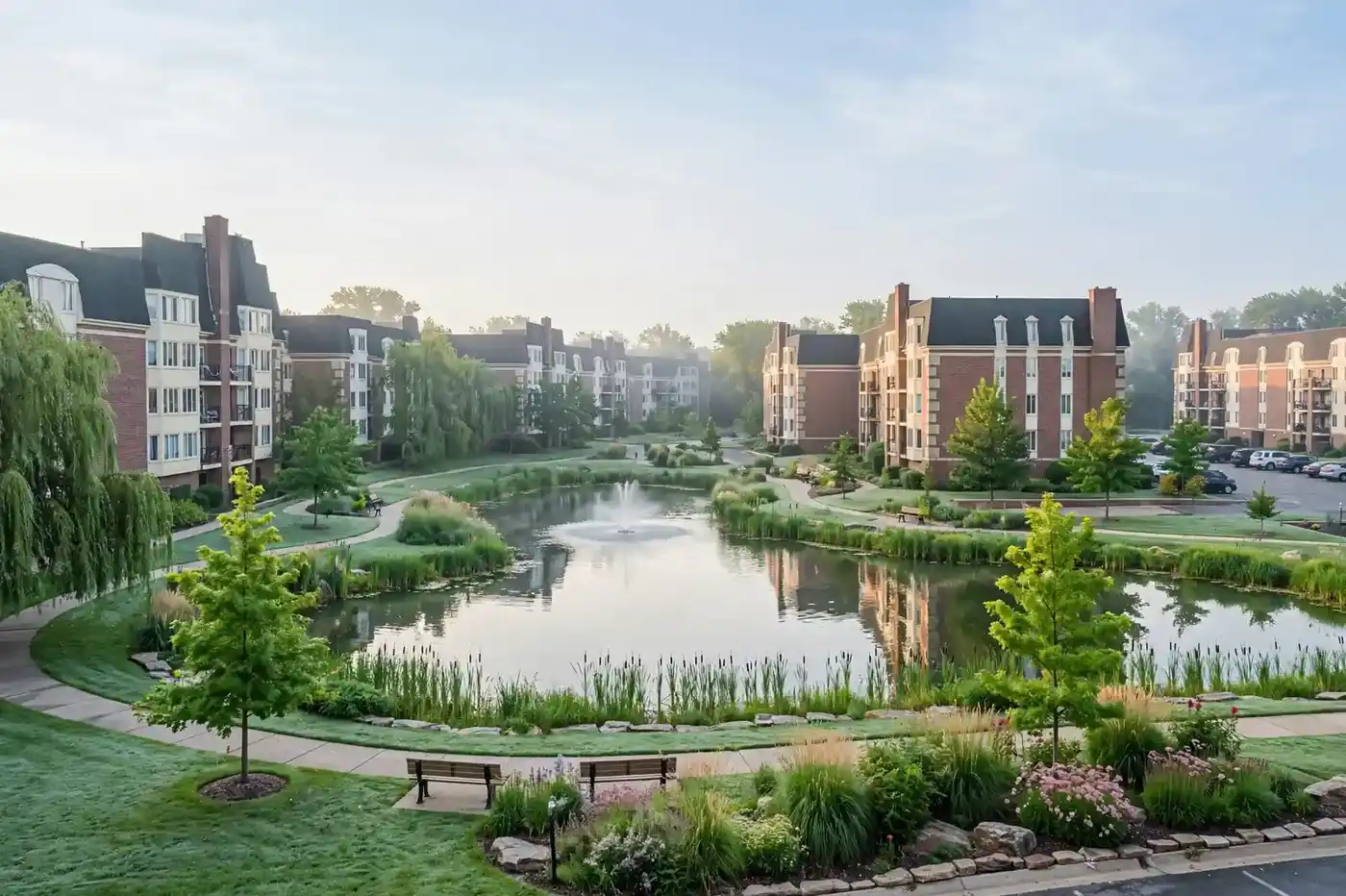
Cambridge-on-the-Lake is not a street of houses — it is a community of brick condo buildings constructed 1970–1974 along Lake Boulevard (225 Lake Blvd in 1970, 150 in 1971, 175 and 250 in 1972, 175 in 1974), arranged around ponds with a clubhouse and indoor pool. The sewer reality follows the building type: cast-iron vertical stacks and building sewers now past 50 years, clay tile site laterals running to the mains, and early ABS transitions — all of it shared infrastructure, none of it belonging to a single unit owner.
That shared ownership changes every job. Foundations are slab-on-grade with common building foundations — no private basements — so access runs through stack closets, crawl spaces, and common-ground easements. The soils are lacustrine-influenced clays with somewhat-poor drainage, and the pond-adjacent setting means a high seasonal water table pressing on every buried joint. Work here is building-system work: descaling or epoxy-lining 50-year-old cast-iron stacks, camera-inspecting the shared building sewer to the city main, and scheduling everything through HOA approval with occupied-unit access.
Area Facts
- Community
- Cambridge-on-the-Lake, IL
- Primary ZIP
- 60089
- Housing
- Brick condo buildings built 1970-1974 (225 Lake Blvd 1970, 150 Lake Blvd 1971, 175/250 Lake Blvd 1972, 175 Lake Blvd 1974). Garden/mid-rise buildings around ponds with clubhouse and indoor pool, on Lake Boulevard.
- Key routes
- Lake Boulevard (50/100/150/175/200/225/250 Lake Blvd)
Sewer Lines in Cambridge-on-the-Lake, IL 60089: Housing, Pipes and Soil
Lake-adjacent clays with somewhat-poor drainage and a high seasonal water table define the underground environment. The northwest-suburb climate — about 32 inches of precipitation, 28 inches of snow, deep freeze-thaw — works on shallow site piping with no basement frost margin, and the heated building envelope affects stack venting behavior. Pond-effect moisture keeps soils wet around foundations for much of the year.
Housing here runs brick condo buildings built 1970-1974 (225 lake blvd 1970, 150 lake blvd 1971, 175/250 lake blvd 1972, 175 lake blvd 1974). garden/mid-rise buildings around ponds with clubhouse and indoor pool, on lake boulevard. The pipe below it runs cast-iron vertical stacks and building sewers at 50+ years (descaling/corrosion era); clay tile site laterals to mains; early abs transitions. Foundations are slab-on-grade / shared building foundations; no private basements; stack closets and crawl spaces for access — which decides how a technician gets access and which methods fit.
Sewer Pipe Materials in Cambridge-on-the-Lake, IL 60089
Here is the pipe story under these streets. Cast-iron vertical stacks and building sewers at 50+ years (descaling/corrosion era); clay tile site laterals to mains; early ABS transitions.
Homes, Foundations and Access in Cambridge-on-the-Lake
Here is what the local housing means underground. Brick condo buildings built 1970-1974 (225 Lake Blvd 1970, 150 Lake Blvd 1971, 175/250 Lake Blvd 1972, 175 Lake Blvd 1974). Garden/mid-rise buildings around ponds with clubhouse and indoor pool, on Lake Boulevard.
Local housing stock drives the service approach. Slab-on-grade / shared building foundations; no private basements; stack closets and crawl spaces for access.
Weather and Soil Pressure in Cambridge-on-the-Lake
Climate and ground conditions do the rest. NW-suburb profile (~32 in precip, ~28 in snow, deep freeze-thaw). Heated garage and building envelope matter for stack venting.
What the ground and sky do to the pipe. Lacustrine-influenced clays, somewhat-poor drainage; pond-adjacent = high seasonal water table.
How Sewer Service Works in Cambridge-on-the-Lake
The diagnostic that matters in Cambridge-on-the-Lake is the camera inspection of the shared building sewer to the city main — it settles, with video evidence, whether a problem belongs to a unit, a stack, or the association. Cast-iron stacks at 50-plus years are in the descaling-or-lining window: mechanical descaling restores diameter, epoxy lining renews the stack from the inside. Every job runs through HOA approval, occupied-unit access scheduling, and the unit-vs-association responsibility split, which is why the written findings report matters as much as the repair. Service routing centers on Lake Boulevard's numbered buildings, near the Lake Arlington recreation area on the Wheeling township / Cook County side.
Sewer Care Calendar for Cambridge-on-the-Lake, IL
The pond-adjacent setting writes Cambridge-on-the-Lake's seasonal calendar. Spring raises the seasonal water table around the ponds, pushing groundwater into 50-year-old cast-iron and clay tile joints — infiltration season, when shared lines run fullest and weak joints show themselves. Summer keeps soils wet from irrigation and pond-effect moisture, sustaining root pressure on site laterals. Fall is the window for the association's annual camera survey: lines are accessible, residents are settled, and findings feed the next year's reserve planning. Winter's deep freeze works shallow site piping with no basement frost margin — the heated building envelope helps stacks but not buried joints. For a 1970–74 community, the highest-value habit is the fall survey: every year, same season, trended against the last.
Common Sewer Issues in Cambridge-on-the-Lake, IL 60089
50-year-old cast-iron stacks
Descaling and corrosion era: stacks lose diameter to scale and thin from corrosion. Descale or epoxy-line before failure.
Shared building sewer defects
Clay tile site laterals with 50-year-old joints serving the whole building — one defect affects every unit above it.
Unit vs. association responsibility
Is the blockage in the unit branch, the stack, or the building sewer? The camera answers, and the answer decides who pays.
High water-table infiltration
Pond-adjacent seasonal water tables push groundwater through aging joints, adding infiltration to every defect.
Access through occupied units
No basements means stack closets and crawl spaces — work scheduled around residents, with HOA sign-off.
Indoor pool and clubhouse plumbing load
Resort amenities add continuous high-volume fixture load to the shared system — another reason for scheduled jetting.
Service Routes Across Cambridge-on-the-Lake, IL 60089
Here is how technicians reach every part of the area. Lake Boulevard (50/100/150/175/200/225/250 Lake Blvd); near Lake Arlington recreation area; Wheeling township / Cook County side; Township HSD 214 (Wheeling HS) area.
Most-Requested Services in Cambridge-on-the-Lake
Sewer Camera Inspection
Camera survey pinpoints every defect underground.
Learn morePipe Lining
Epoxy liner renews pipe from the inside.
Learn moreSewer Line Cleaning
Hydro jetting clears grease, roots, and scale.
Learn moreSewer Maintenance
Scheduled cleaning keeps lines flowing year-round.
Learn moreCommercial Sewer Services
Sewer care for offices, retail, and industrial sites.
Learn moreWhen to Call (833) 713-2101 in Cambridge-on-the-Lake
Unit owners should call (833) 713-2101 for slow drains isolated to one unit, gurgling that follows fixture use, or odors from a single stack. The association or property manager should call for backups affecting multiple units, wet common areas over the building sewer's path, or any recurring issue that suggests the shared line — plus every fall to schedule the annual camera survey. In a multi-unit emergency, one coordinated call beats five separate ones.
Frequently Asked Questions
Who is responsible for sewer problems in my condo — me or the HOA?
It depends on where the defect is: unit branches are typically the owner's, while stacks and building sewers to the city main are typically the association's. A camera inspection locates the defect precisely, and the written report documents which side of the responsibility line it falls on. Call (833) 713-2101 to schedule the inspection.
What is wrong with 50-year-old cast-iron stacks?
Fifty years of internal corrosion and scale: the pipe narrows, roughens, and eventually thins through. Mechanical descaling restores flow; epoxy lining renews the stack from the inside without opening walls. The camera shows which stage your stacks are in.
Can you work in an occupied building?
Yes — condo sewer work is routinely scheduled around residents, with HOA approval, defined access windows for stack closets, and containment that keeps common areas clean. The association, not individual units, usually coordinates.
How do you inspect a shared building sewer?
A camera runs the building sewer from the building to the city main, recording joints, roots, cracks, and offsets with footage. The recording plus the written report is what the board uses to approve lining, repair, or a maintenance program.
Does the pond affect our sewer lines?
The pond-adjacent setting raises the seasonal water table, which pushes groundwater into aging joints — infiltration that adds flow to the line and stress to the system. It is one reason camera surveys here check for infiltration, not just blockages.
Should our association consider a maintenance program?
For 1970s buildings with shared sewers, yes: scheduled main-line camera surveys and hydro-jetting catch joint failures before they become multi-unit emergencies, and the documentation supports reserve planning. Call (833) 713-2101 to discuss a board-level program.
How often should our association survey the building sewers?
Annually, in the fall: a main-line camera survey of each building sewer to the city main, trended year over year. For 1970–74 buildings with 50-year-old joints, the annual survey is what catches a developing offset while it is still a lining job. Call (833) 713-2101 to set the fall schedule.
Can residents stay in their units during sewer work?
Yes. Stack and building-sewer work is scheduled in defined access windows, with containment protecting common areas and occupied units. Trenchless lining needs no interior demolition — residents stay put.
How do you service cast-iron stacks in occupied condo buildings?
From the top down and the bottom up, in scheduled windows the building approves. The camera runs the full stack to map scale buildup, corrosion, and joint condition at 50 years; descaling restores flow with rotary chain tools that scour the interior without opening walls; and where the pipe is too far gone, epoxy lining renews it from inside. Residents stay in their units — the work is contained to utility chases and scheduled access points, with water shutoffs announced in advance and kept short. The 1970–74 stacks are at the age where descaling-or-lining is the decision, and the camera makes it with evidence instead of age alone. Call (833) 713-2101 to schedule the stack assessment.
Does living next to the ponds affect our building sewers?
Yes, in two ways the survey accounts for. First, the seasonal water table around the ponds runs higher than in dry neighborhoods, so infiltration through 50-year-old joints is heavier in spring — shared lines carry more groundwater and show their weak joints sooner. Second, the constant soil moisture accelerates root pressure on site laterals near the water. Neither is an emergency, but both are reasons the annual fall survey matters more here than in a dry community: the pond-adjacent setting makes the camera's trend data the board's best planning tool. Call (833) 713-2101 to set the fall survey schedule.
Sewer Line Problems Don’t Wait. Neither Should You.
Call now and reach a local sewer line specialist serving Buffalo Grove, IL and nearby northwest suburbs — 24/7.
(833) 713-2101Free to call · No obligation · 24/7 emergency line
Serving Cambridge-on-the-Lake, IL 60089