
Sewer Line Repair in Palatine, IL
Local sewer line service for Palatine, Illinois 60067 — camera inspection, trenchless repair, and 24/7 emergency response from specialists who know this area's pipe. Call (833) 713-2101.
- 24/7 emergency line
- Northwest suburb specialists
- Free to call
In short: Sewer line repair in Palatine, IL 60067 hits whole subdivisions at once: 41.6% of homes built 1960–79 means clay tile and Orangeburg laterals reaching end-of-life together. Call (833) 713-2101 for a camera inspection.
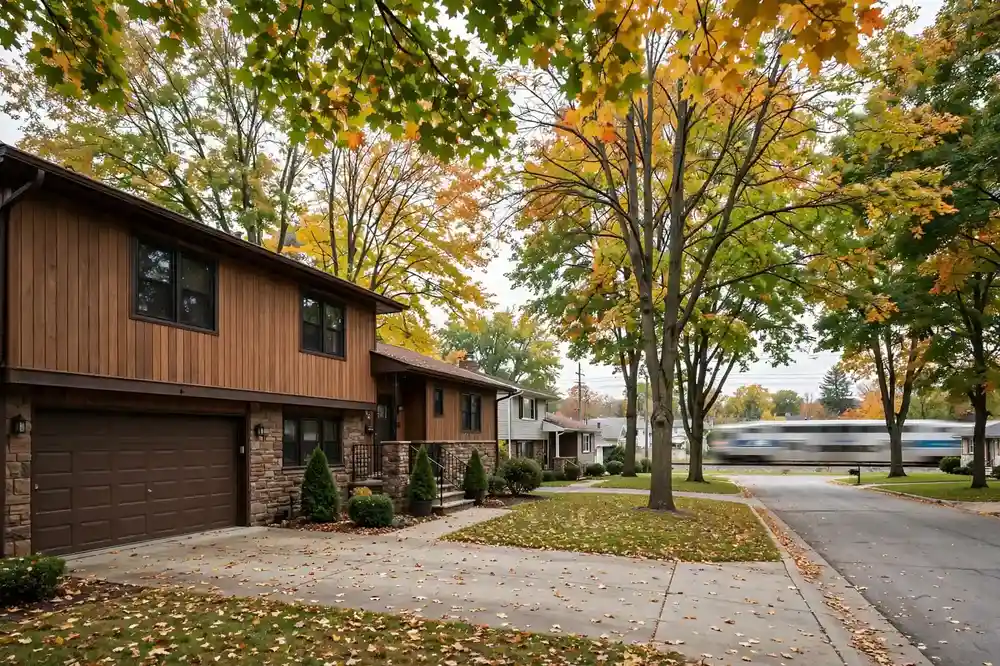
Palatine, IL 60067 has a median build year of 1977 — 41.6% of homes went up 1960–79, another 31% 1980–99 — with the downtown district's median at 1962. The pipe is the era's signature: clay tile and Orangeburg in the 60s–70s bulk, cast-iron interiors, PVC on the 80s–90s edges. Full basements are standard, finished lower levels common, and the soil is glacial till silty clay loam with Buffalo Creek headwaters running through Palatine — creekside lots flood.
When 41.6% of a village's housing shares a birth decade, the laterals fail on the same schedule: route-density work, one street and multiple jobs, as whole subdivisions discover root intrusion and Orangeburg deformation within the same few years. Downtown's 1962-era stock is the oldest-lateral pocket; creekside homes add infiltration and sump-backup calls every spring.
Area Facts
- Community
- Palatine, IL
- Primary ZIP
- 60067
- Housing
- Median built year 1977
- Key routes
- Northwest Hwy
Sewer Lines in Palatine, IL 60067: Housing, Pipes and Soil
Glacial till silty clay loam; Buffalo Creek headwaters in Palatine with creekside lots flooding. Northwest-suburb freeze-thaw works the 60s–70s joints every winter; spring creek flooding loads cracked laterals and sumps.
Housing here runs median built year 1977; 41.6% built 1960-79, 31% 1980-99; downtown district median 1962. The pipe below it runs clay tile + orangeburg in the 60s-70s bulk; cast-iron interiors; pvc on 80s-90s edges. Foundations are full basements standard; finished lower levels common — which decides how a technician gets access and which methods fit.
Sewer Pipe Materials in Palatine, IL 60067
Here is the pipe story under these streets. Clay tile + Orangeburg in the 60s-70s bulk; cast-iron interiors; PVC on 80s-90s edges.
Homes, Foundations and Access in Palatine
Here is what the local housing means underground. Median built year 1977; 41.6% built 1960-79, 31% 1980-99; downtown district median 1962.
Local housing stock drives the service approach. Full basements standard; finished lower levels common.
Weather and Soil Pressure in Palatine
Climate and ground conditions do the rest. NW-suburb freeze-thaw; spring creek flooding.
What the ground and sky do to the pipe. Glacial till silty clay loam; Buffalo Creek headwaters in Palatine - creekside lots flood.
How Sewer Service Works in Palatine
Palatine rewards the camera-first route-density model: when one 1968 lateral on the street shows root-destroyed clay tile, the neighbors' laterals are usually on the same timeline — inspect the street, plan the work, and schedule efficiently. Root cutting plus sectional lining handles the joint failures; bursting replaces deformed Orangeburg trenchlessly. Creekside homes near the headwaters get infiltration assessment and backwater-valve recommendations with every lateral job. Routing follows Northwest Highway, Dundee Road, and Palatine Road, near downtown Palatine, Palatine and Fremd High Schools (District 211), and the Metra UP-NW station. Call (833) 713-2101.
Sewer Care Calendar for Palatine, IL
Palatine's railroad-era calendar splits by housing type. In the 1950s–60s tracts: winter freeze-thaw works 60-year-old clay tile joints; spring stormwater floods parkway-adjacent streets and loads cracked laterals; summer's mature trees push roots into the joints; fall is the cutting and camera season. Downtown's multi-unit stock runs the association calendar — spring jetting before summer occupancy peaks, fall surveys for budget planning. The railroad corridor adds its own note: vibration and fill soils near the tracks can settle joints over decades, so laterals near the corridor deserve the camera's attention regardless of age. Palatine's rule: the tracts live by the root calendar, downtown lives by the maintenance calendar.
Common Sewer Issues in Palatine, IL 60067
Subdivision-wide simultaneous failure
Whole 60s–70s subdivisions hitting end-of-life together — inspect the street, not just the house.
Root intrusion across the 60s–70s bulk
Clay tile joints under 50-year-old subdivision trees: the dominant failure pattern.
Orangeburg deformation
Fiber pipe in the 60s–70s tracts ovaling and blistering — bursting is the replacement.
Creekside infiltration and flooding
Buffalo Creek headwaters flood creekside lots each spring, surcharging cracked joints.
Downtown's oldest laterals
The 1962-median downtown district holds the oldest pipe — priority camera territory.
Railroad corridor settlement
Vibration and fill soils near the tracks can settle joints over decades — corridor-adjacent laterals get camera attention.
Service Routes Across Palatine, IL 60067
Here is how technicians reach every part of the area. Northwest Hwy; Dundee Rd; Palatine Rd; downtown Palatine; Palatine HS & Fremd HS (Dist 211); Metra UP-NW Palatine station.
Most-Requested Services in Palatine
When to Call (833) 713-2101 in Palatine
Call (833) 713-2101 when drains slow through summer in the tracts, when backups recur within two years, or when multi-unit symptoms suggest the shared line. Call immediately for sewage at a floor drain or surfacing effluent. Downtown property managers should call in spring to set the jetting schedule and in fall for the survey — and tract homeowners should call every fall for root management: in Palatine, the calendar is the cure.
Frequently Asked Questions
My whole street seems to have sewer problems. Is that normal?
In Palatine, yes — 41.6% of homes were built 1960–79, so entire subdivisions reach end-of-life together. When your neighbor's lateral fails, yours is usually on the same timeline. A camera inspection tells you where yours stands; call (833) 713-2101.
Can you handle multiple homes on one street efficiently?
Yes — route-density work is how Palatine is best served. Camera inspections across several homes on the same street, scheduled cutting and lining in sequence, and shared mobilization keep everyone's cost down.
My home is near Buffalo Creek. Does that matter?
It does: creekside lots flood, and floodwater finds every cracked joint. Creekside laterals get infiltration assessment with every job, and finished basements near the creek should have backwater valves.
How do I know if my lateral is Orangeburg?
If your Palatine home was built in the 1960s–70s tract developments, it is a candidate. The camera shows it definitively — Orangeburg ovals and blisters distinctively. Deformed Orangeburg is replaced by bursting, not repaired.
Is downtown Palatine's sewer stock really older?
The downtown district's median build year is 1962 — the oldest-lateral pocket in the village. If you own downtown, a baseline camera inspection is the highest-value diagnostic you can buy.
Do you serve near the Metra station?
Yes — all of Palatine 60067, including downtown, the neighborhoods near the Metra UP-NW station, and the subdivisions along Northwest Highway, Dundee Road, and Palatine Road. Call (833) 713-2101.
Do trains near my home affect the sewer line?
Over decades, vibration and fill soils along the railroad corridor can contribute to joint settlement. It is a background factor, not an emergency — but laterals near the tracks are worth including in the periodic camera schedule. Call (833) 713-2101.
What is the difference between the tracts and downtown service?
The tracts get the residential root cycle — cutting, camera, lining or bursting on 60-year-old clay tile. Downtown multi-unit buildings get association-level work: scheduled jetting, stack service, and building-sewer surveys. Same company, different playbook.
Do the railroad tracks really affect my sewer line?
Over decades, yes — as a background factor, not an emergency. Vibration from rail traffic and the fill soils typically placed along rail corridors can contribute to gradual joint settlement in nearby laterals, particularly in the older clay tile stock. The effect is slow and cumulative: joints that would have lasted 70 years might show settlement at 60. The practical response is inclusion, not alarm — laterals within a few blocks of the corridor get the camera's attention on the regular inspection schedule, and the footage shows whether settlement is actually present. If it is, sectional lining or bursting resolves it like any other joint defect. Call (833) 713-2101 for the corridor check.
What does downtown multi-unit service include?
The association-level program: scheduled hydro-jetting of the building sewers, camera surveys of the shared lines with written reports for the board, cast-iron stack descaling or lining as the 1960s–70s stacks age, and emergency response that coordinates with property managers. Downtown Palatine's multi-unit buildings run the same systems as the era's residential stock — clay tile and cast iron — but shared, which means the maintenance is planned at the building level rather than per unit. The annual survey feeds the budget cycle; the jetting keeps the lines clear between surveys. Call (833) 713-2101 to set up the building program.
Sewer Line Problems Don’t Wait. Neither Should You.
Call now and reach a local sewer line specialist serving Buffalo Grove, IL and nearby northwest suburbs — 24/7.
(833) 713-2101Free to call · No obligation · 24/7 emergency line
Serving Palatine, IL 60067