
Sewer Line Repair in Long Grove, IL
Local sewer line service for Long Grove, Illinois 60047 — camera inspection, trenchless repair, and 24/7 emergency response from specialists who know this area's pipe. Call (833) 713-2101.
- 24/7 emergency line
- Northwest suburb specialists
- Free to call
In short: Sewer line repair in Long Grove, IL 60047 is the septic-adjacent market: estate lots where laterals run 100–300+ feet, many homes on private septic, and the highest-value work is septic-to-sewer conversion. Call (833) 713-2101 — camera plus site evaluation first.
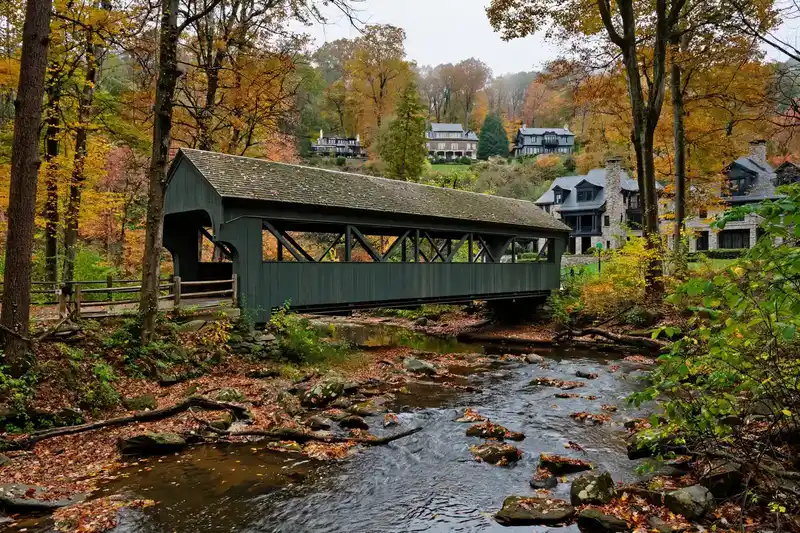
Long Grove, IL 60047 is estate country: zoning minimums of 3 acres (R1), 2 acres (R2), and 1 acre (R3), Illinois' first historic district (1960), and the famous covered bridge — with Buffalo Creek headwaters running through it all. The sewer reality is unlike anywhere else in the service area: many homes run on private septic (onsite wastewater systems are documented across Long Grove subdivisions), while sewered properties carry laterals 100–300+ feet from house to main or to tank and field.
Older estates may pair clay tile with septic tanks; newer ones run long PVC laterals. Foundations range from full basements on newer estates to stone foundations and shallow crocks on older farmhouses. The soils are glacial till plus conservancy and scenic-corridor soils — clay that limits septic absorption, with documented system failures — and seasonal high water tables in low areas. The rural canopy means drifting snow, frozen septic fields, and spring melt overwhelming marginal drain fields.
Area Facts
- Community
- Long Grove, IL
- Primary ZIP
- 60047
- Housing
- Estate lots: zoning minimums R1=3 acres, R2=2 acres, R3=1 acre
- Key routes
- Historic downtown Long Grove
Sewer Lines in Long Grove, IL 60047: Housing, Pipes and Soil
Glacial till plus conservancy/scenic-corridor soils; clay that limits septic absorption with common system failures; seasonal high water tables in low areas. Rural canopy brings drifting snow and frozen septic fields in winter; spring melt overwhelms marginal drain fields. Mature forest roots plus clay soils equal chronic absorption problems.
Housing here runs estate lots: zoning minimums r1=3 acres, r2=2 acres, r3=1 acre; historic downtown, first historic district in illinois (1960); famous covered bridge. The pipe below it runs many homes on private septic (onsite wastewater systems documented for long grove subdivisions); where sewered, long pvc laterals; older estates may have clay tile + septic tanks. Foundations are full basements on newer estates; older farmhouses with stone foundations and shallow crocks — which decides how a technician gets access and which methods fit.
Sewer Pipe Materials in Long Grove, IL 60047
The underground picture, street by street. Many homes on PRIVATE SEPTIC (onsite wastewater systems documented for Long Grove subdivisions); where sewered, long PVC laterals; older estates may have clay tile + septic tanks.
Homes, Foundations and Access in Long Grove
Local housing stock drives the service approach. Estate lots: zoning minimums R1=3 acres, R2=2 acres, R3=1 acre; historic downtown, first historic district in Illinois (1960); famous covered bridge.
Here is what the local housing means underground. Full basements on newer estates; older farmhouses with stone foundations and shallow crocks.
Weather and Soil Pressure in Long Grove
What the ground and sky do to the pipe. Rural canopy = drifting snow, frozen septic fields; spring melt overwhelms marginal drain fields.
Climate and ground conditions do the rest. Glacial till + conservancy/scenic-corridor soils; clay limits septic absorption with common system failures; seasonal high water table in low areas.
How Sewer Service Works in Long Grove
The highest-value work in Long Grove is septic-to-sewer conversion: failed drain-field diagnosis, tank-to-main connections with well-separation setbacks, and new laterals engineered for 100–300-foot runs. Camera inspection plus soil evaluation before quoting is mandatory — conservancy easements restrict excavation routes, and the run's length makes method selection a real cost decision. Where sewered, trenchless bursting or lining handles the long runs far cheaper than open-cut through forest. Routing centers on historic downtown Long Grove, the covered bridge, IL-83, and the Stevenson High School district area. Call (833) 713-2101 — the site evaluation comes before the quote.
Sewer Care Calendar for Long Grove, IL
Long Grove's rural calendar is the septic calendar. Winter freezes septic fields and drifts snow over estate laterals — frozen fields stop absorbing, and the system backs toward the house. Spring melt overwhelms marginal drain fields all at once; this is when failing fields announce themselves with surfacing effluent and odors. Summer's forest root growth presses on older clay tile sections and tank connections. Fall is evaluation season: soil evaluation and camera inspection before the ground freezes, conversion planning through winter, construction in the April-to-November window. For septic properties, the fall evaluation is the decision point — it determines whether the field gets one more year or the conversion starts in spring.
Common Sewer Issues in Long Grove, IL 60047
Failing septic drain fields
Clay soils with poor absorption: fields fail, surface, or back up. Diagnosis first, then conversion planning.
100–300-foot lateral runs
Estate laterals are long enough that method selection — trenchless vs. open-cut — is a major cost decision.
Well-separation setbacks
Septic conversions must respect well setbacks; the route is engineered, not improvised.
Conservancy easement restrictions
Scenic-corridor and conservancy easements limit where excavation can go — the camera and the plat map plan the route.
Forest root pressure on joints
Mature forest roots plus clay soils: chronic joint intrusion on older clay tile sections.
Historic-district construction constraints
Illinois' first historic district (1960) can constrain visible construction — trenchless methods keep the work out of sight.
Service Routes Across Long Grove, IL 60047
Coverage runs along the area's main routes. Historic downtown Long Grove; covered bridge; IL-83; Stevenson HS (Dist 125); Kildeer Countryside schools; Buffalo Creek headwaters run through Long Grove.
Most-Requested Services in Long Grove
Sewer Line Installation
New laterals for builds and septic conversions.
Learn moreSewer Camera Inspection
Camera survey pinpoints every defect underground.
Learn moreSewer Line Replacement
Brand-new lateral when repair stops making sense.
Learn moreTrenchless Sewer Repair
Renew laterals with minimal digging.
Learn moreWhen to Call (833) 713-2101 in Long Grove
Call (833) 713-2101 when drains slow across the whole house on septic, when effluent surfaces over the drain field, when sewage odors appear outdoors, or when the field area stays soggy. On sewered estates, call for the same lateral symptoms as anywhere — slow drains, gurgling, backups — with the understanding that the run may be 200 feet through forest. And call in fall for the annual septic evaluation: it is cheaper than the spring emergency.
Frequently Asked Questions
Can you convert my Long Grove septic system to sewer?
Where a municipal main is available, yes — septic-to-sewer conversion is core work in Long Grove. The plan covers failed drain-field diagnosis, tank abandonment, the new lateral's engineered route, and well-separation setbacks. Call (833) 713-2101 for the site evaluation.
How do I know my septic field is failing?
Surfacing effluent, sewage odors, slow drains throughout the house, and lush stripes over the field are the signs. A site evaluation with soil assessment confirms it — clay soils in Long Grove fail fields that would work in sandier ground.
My lateral is 250 feet long. Can trenchless handle that?
Yes — long runs are where trenchless earns its keep. Bursting and lining handle extended footage through small access points, avoiding open-cut through forest and conservancy land. The camera inspection maps the full run first.
What are well-separation setbacks?
Minimum distances required between wells and septic components or sewer work, set by health codes. The conversion plan is engineered around them — one reason the site evaluation precedes any quote.
Do easements affect my sewer repair?
In Long Grove they can: conservancy and scenic-corridor easements restrict excavation routes. The repair plan works within the easement terms, which is why the plat and the camera map are reviewed together.
Do you serve the historic downtown area?
Yes — all of Long Grove 60047, including historic downtown, the covered bridge area, the IL-83 corridor, and the estate subdivisions. Call (833) 713-2101.
How long does a septic-to-sewer conversion take?
Typically one to two weeks from mobilization: tank abandonment, the engineered lateral installation with well-setback compliance, connections, and restoration. The fall evaluation and winter planning mean spring construction starts ready. Call (833) 713-2101 for the site evaluation.
Will conversion require clearing my forest?
No — the lateral route is engineered around conservancy easements and specimen trees, and trenchless segments handle long runs without clearing. The camera and the plat map plan a route the forest keeps.
What are the well-setback rules for a new sewer lateral?
Illinois and Lake County rules keep sewer laterals and septic components at prescribed distances from private wells — the exact setbacks depend on the component and the well type, and the engineered plan documents compliance for the permit. This is one reason conversions are designed rather than improvised: the lateral route, the tank abandonment, and the connection point are all plotted against the well locations on the plat before any work starts. The camera inspection of the existing system and the site survey together produce a route that satisfies the setbacks while avoiding conservancy easements and specimen trees. Call (833) 713-2101 for the site evaluation and the engineered plan.
Will work be visible from the road in the historic district?
No — and that is a design requirement, not an accident. Illinois' first historic district, designated in 1960, protects Long Grove's rural character, so sewer work here defaults to trenchless methods: the camera and the bursting or lining equipment work from small access points, usually set back from the road and screened by the existing landscape. Open-cut is avoided wherever the district's character is visible. The result is a renewed lateral with no trench scar, no disturbed stonework, and no change to the streetscape the district was created to protect. Call (833) 713-2101 to discuss the plan for your property.
Sewer Line Problems Don’t Wait. Neither Should You.
Call now and reach a local sewer line specialist serving Buffalo Grove, IL and nearby northwest suburbs — 24/7.
(833) 713-2101Free to call · No obligation · 24/7 emergency line
Serving Long Grove, IL 60047