
Pipe Lining in Buffalo Grove, IL
Pipe lining (CIPP) creates a new pipe inside your old Buffalo Grove, IL sewer line — no trench, no torn-up yard. A camera inspection first confirms your line is a lining candidate. Call (833) 713-2101.
- 24/7 emergency line
- Northwest suburb specialists
- Free to call
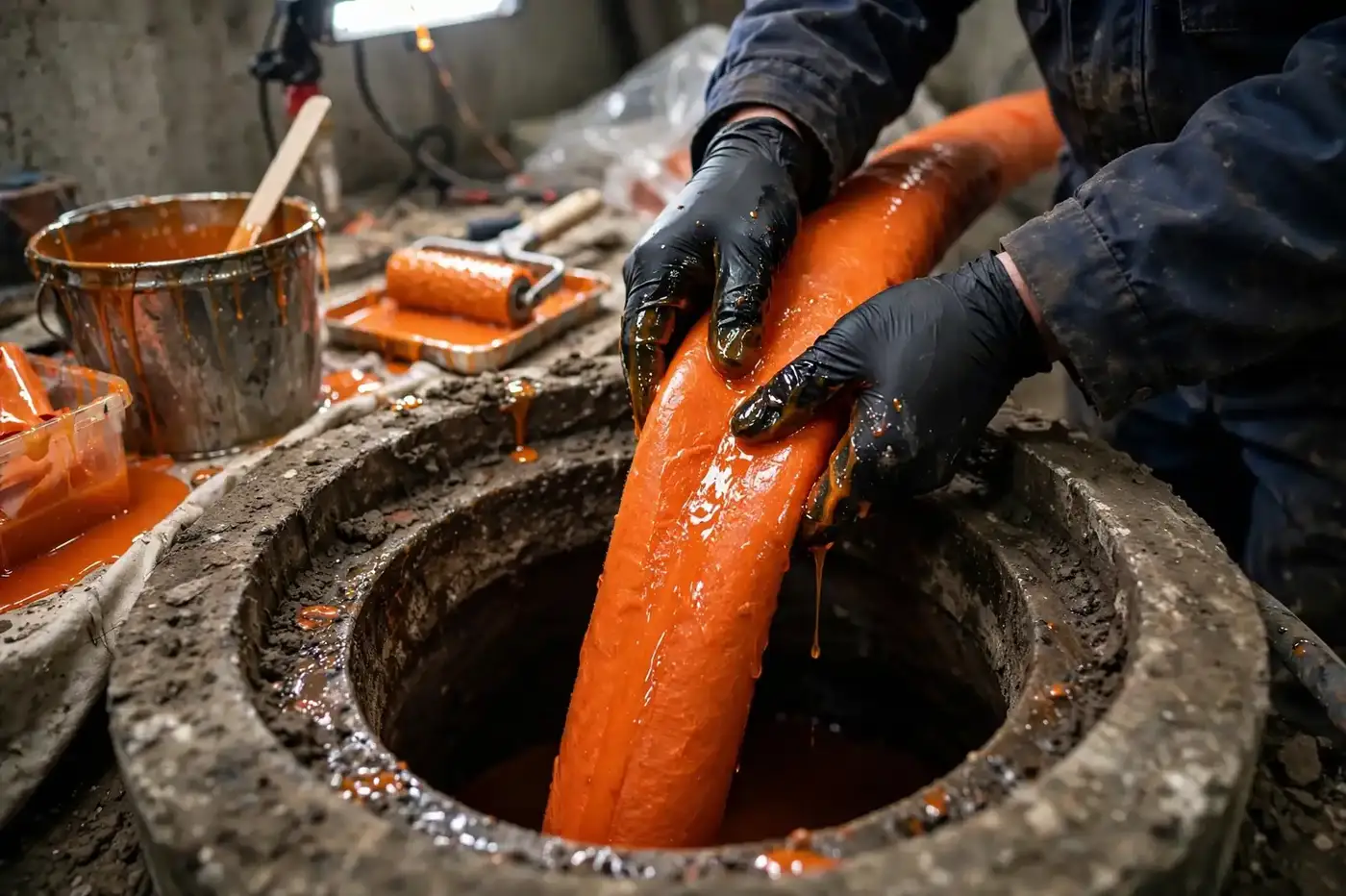
In short: Pipe lining in Buffalo Grove, IL installs an epoxy-saturated liner inside the existing sewer pipe, curing into a smooth, jointless new pipe within the old one — usually in one day. Call (833) 713-2101 to schedule the camera inspection that determines whether lining fits your line.
Cured-in-place pipe (CIPP) lining is the least disruptive way to renew a damaged sewer lateral. Instead of removing the old pipe, a flexible liner saturated with epoxy resin is inverted or pulled into the line, pressed against the old pipe's interior, and cured into a hard, smooth, joint-free tube. The old clay tile or cast iron becomes a host; the liner becomes the new pipe.
In Buffalo Grove's northwest suburbs, lining is the answer for the most common failure pattern: structurally sound pipe with bad joints. The 1978–1986 transition-era homes of Highland Grove, where clay tile meets PVC at one root-prone coupling, are textbook lining candidates — one bad joint, fixed from the inside, with the landscaping untouched. Call (833) 713-2101 and a camera inspection will show whether your line qualifies.
Signs You Need Pipe Lining
Root intrusion at joints, pipe otherwise intact
When the camera shows roots entering at couplings but the pipe barrel is sound, lining seals every joint at once — the highest-value fix for this pattern.
Cracks and fractures without collapse
Longitudinal cracks and fractured sections that still hold their shape are ideal: the liner bridges them and restores structural strength.
Scale and corrosion narrowing cast iron
Old cast-iron house sewers lose diameter to internal scale. Lining over a descaled pipe restores smooth, full flow.
Offset joints letting in soil and water
Slightly shifted joints admit groundwater and fine soil. A cured liner spans the offsets and stops infiltration.
Recurring blockages at the same spots
Blockages that return to the same footage marks point to joint defects. Lining eliminates the defect rather than clearing its symptom.
Landscaping or structures over the line
When the lateral runs under a patio, mature trees, or an addition, lining avoids the excavation that open-cut would demand.
What Causes Pipe Lining Problems
Lining candidates are created by joint failure, not material failure. Clay tile pipe from the 1950s–1970s is still strong in the barrel, but its joints — mortar, rubber, or simple bell-and-spigot — separate under decades of freeze-thaw movement in glacial-till clay. Each separated joint is a doorway for roots and groundwater. Cast-iron interiors corrode from the inside out, roughening the surface until waste snags and builds.
What lining cannot fix is loss of shape: a fully collapsed section, a severe belly holding inches of water, or pipe crushed by heavy loads. That distinction is exactly what the pre-lining camera inspection establishes — lining the wrong line wastes everyone's money.
How Pipe Lining Works, Step by Step
- 1Camera inspection and cleaning
Call (833) 713-2101. The line is camera-mapped, then hydro-jetted or descaled so the liner bonds to a clean surface.
- 2Liner measurement and preparation
The liner is cut to the exact footage, saturated with two-part epoxy resin, and loaded for inversion or pull-in.
- 3Installation
The liner is inverted through the old pipe with air or water pressure, pressing it firmly against the host pipe's interior from end to end.
- 4Curing
Hot water, steam, or ambient cure hardens the resin into a rigid, jointless new pipe — typically within a few hours.
- 5Final camera verification
A post-cure camera pass confirms full adhesion, open tie-ins, and smooth flow before the crew restores the access points.
Equipment and Materials
- CIPP liner tubes in residential and commercial diameters
- Two-part epoxy resin systems
- Inversion drums or pull-in winches
- Curing equipment (hot water / steam / ambient)
- Hydro jetters and descaling chain flails for prep
- Pre- and post-installation sewer cameras
Safety on Every Visit
Lining work is low-excavation but chemically serious: resins are handled with gloves and ventilation per manufacturer data, curing equipment is monitored for pressure and temperature, access points are barricaded, and the crew confirms no cross-connections or open tie-ins before the liner cures. The work area stays clean — no trench, no spoil piles.
Pipe Lining in Buffalo Grove's Northwest Suburbs
The northwest suburbs are lining country. Highland Grove's transition joints, Strathmore's root-entry couplings, Mill Creek's 50-year-old clay tile under street trees, and the shared building sewers of Cambridge-on-the-Lake and Oak Creek all fit the lining profile: bad joints, sound barrels, expensive surfaces above. Lincolnshire's tree-preservation ordinance makes lining the default where excavation permits would be painful, and finished basements across Buffalo Grove favor a no-dig fix that never opens the floor.
Related Sewer Services
Frequently Asked Questions
How long does a lined pipe last?
A properly installed CIPP liner is engineered for a 50-year design life. It resists roots, corrosion, and scale because it has no joints and a smooth epoxy surface.
Does lining reduce the pipe's diameter?
Slightly — the liner is only a few millimeters thick. Because the new surface is far smoother than old clay or scaled cast iron, flow capacity typically improves despite the small reduction.
Can every sewer line be lined?
No. The host pipe must still hold its shape: no full collapses, no severe bellies, adequate diameter. The pre-lining camera inspection is what qualifies or disqualifies a line — call (833) 713-2101 to schedule it.
How long does lining take?
Most residential linings complete in one day: morning prep and install, afternoon cure, final camera verification before evening.
Will I have to leave my home during lining?
Usually not. Water use is paused for a few hours during cure, and the crew will tell you the exact window. There is no trench, no heavy equipment in the yard, and no reason to relocate.
Is pipe lining approved for Buffalo Grove homes?
CIPP lining is an established trenchless method used across the Chicago suburbs. The specialist will confirm the approach fits your line's condition and your municipality's requirements during the inspection visit.
Sewer Line Problems Don’t Wait. Neither Should You.
Call now and reach a local sewer line specialist serving Buffalo Grove, IL and nearby northwest suburbs — 24/7.
(833) 713-2101Free to call · No obligation · 24/7 emergency line