Sewer lines rarely fail without warning. They send signals for months — sometimes years — before the big backup. The trouble is that most homeowners don't recognize the signs until sewage is on the basement floor. Here are the seven warnings worth acting on.
One slow sink is a local clog. When the tub, toilet, and basement floor drain all misbehave together, the problem is in the main line they share — your sewer lateral.
That glug-glug after a flush is air trapped by a partial blockage. It's the sewer line's way of clearing its throat, and it means flow is restricted somewhere downstream.
A healthy sewer line is airtight. If you smell sewage in the basement, near drains, or in the yard, gas is escaping through a crack or a dried-out trap — and cracks let more than gas through.
Sewage is fertilizer. A suspiciously green stripe across the lawn, especially along the line's path to the street, often marks a leak feeding the grass from below.
If snaking or plunging fixes the drain for a few weeks and then it slows again, you're treating a symptom. The underlying cause — roots, scale, a belly — is still there.
Flush the upstairs toilet and water rises in the basement shower? That's a main-line restriction pushing water to the lowest open fixture.
A leaking lateral erodes the soil around it. Over time that shows up as settled ground over the line's path or new cracks near the foundation.
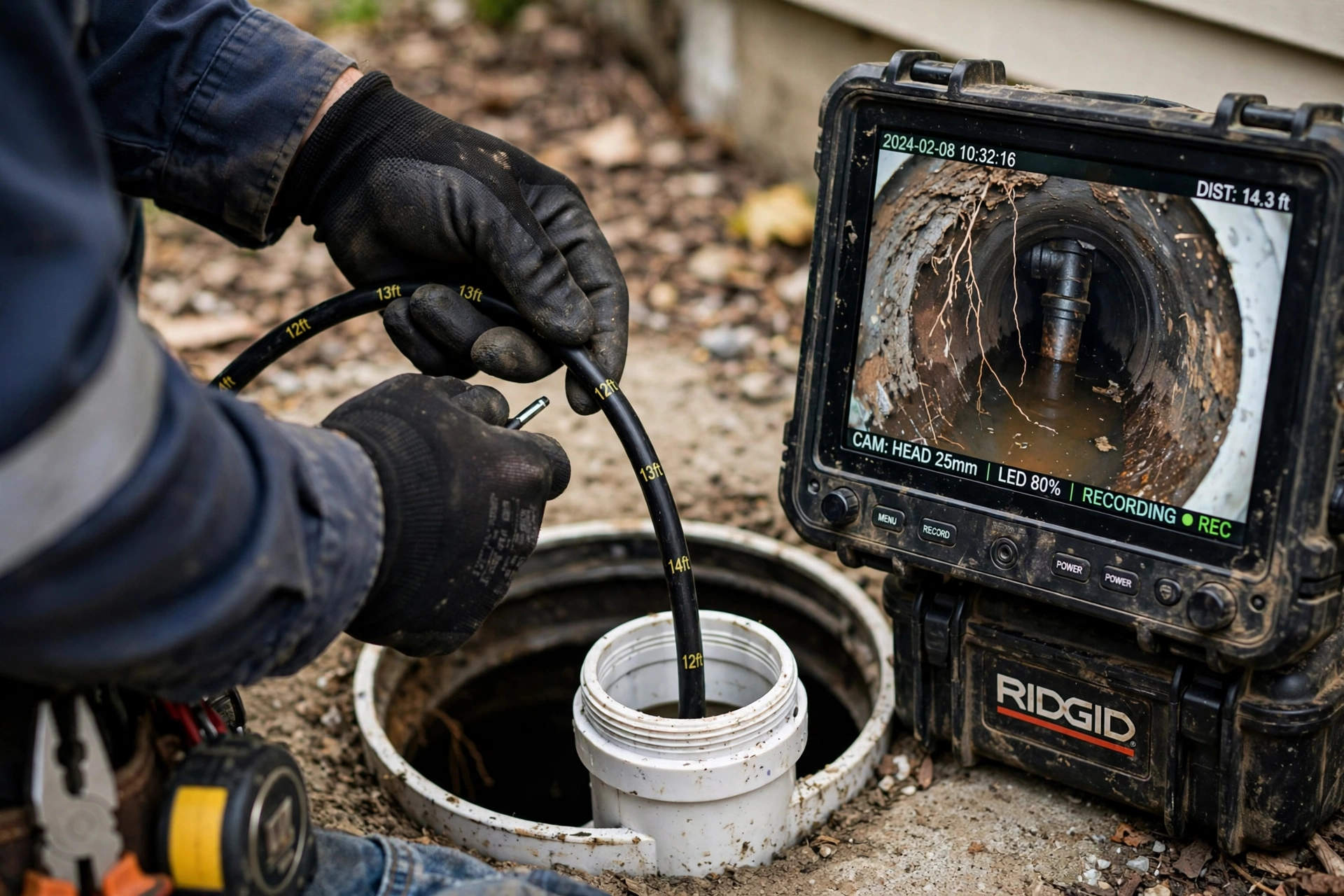
Don't wait for the backup. A camera inspection — typically $150–$400 — shows exactly what's happening inside the line, and catching a crack early can mean a spot repair instead of a full replacement. Call (833) 713-2101 and we'll take a look before a warning becomes an emergency.
Free consultation · Upfront pricing · Buffalo Grove & nearby suburbs
Call (833) 713-2101Questions about your sewer line in Buffalo Grove? Talk to a specialist now.
