| Buffalo Grove, IL| Licensed Insured Team| 24/7 Emergency Line

Home » Blog » 7 Warning Signs Your Sewer Line Is Failing

7 Warning Signs Your Sewer Line Is Failing

By Sewer Line Repair Specialists · September 2026 · Buffalo Grove, IL

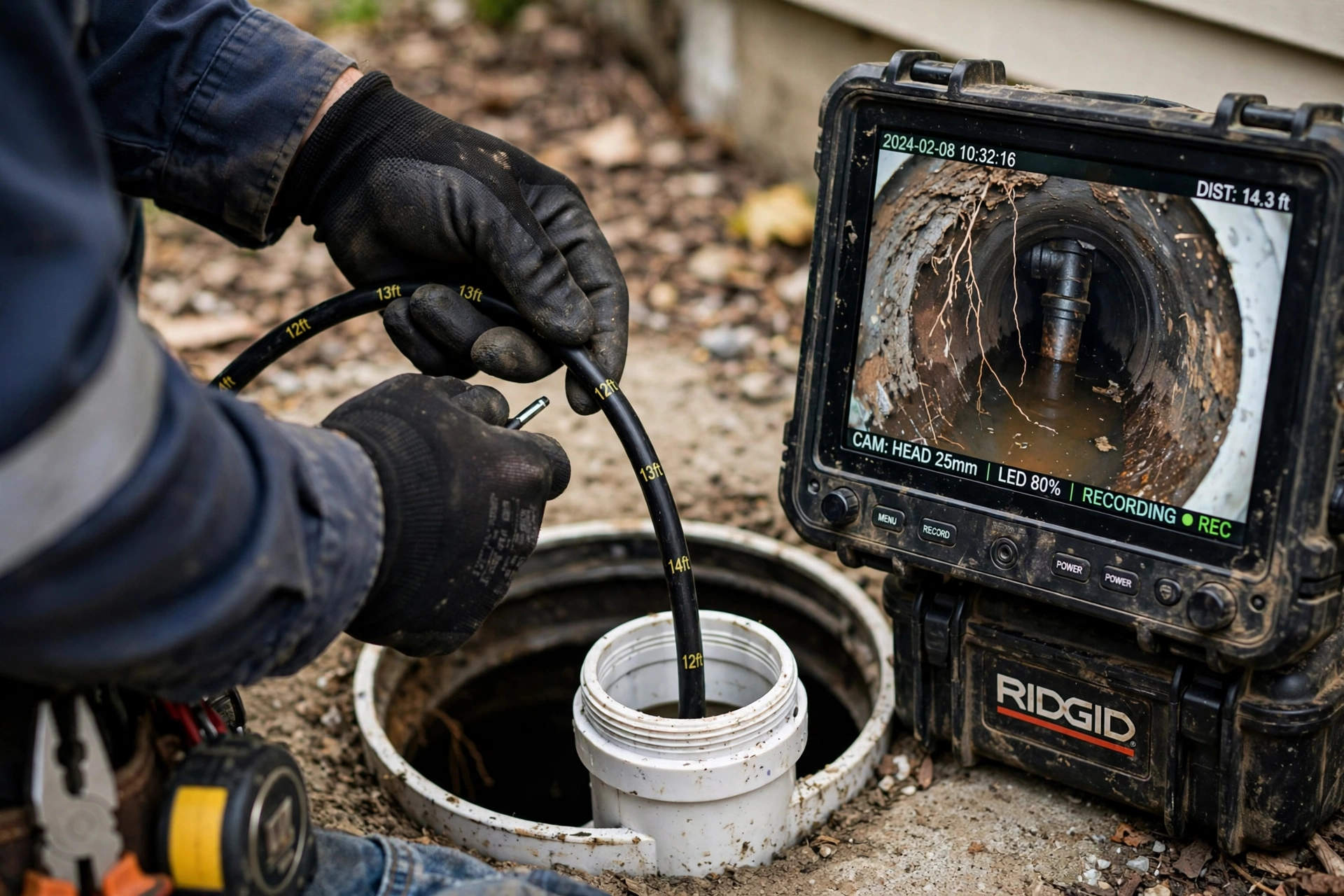
Camera inspection revealing a failing sewer line interior

Sewer lines rarely fail without warning. They send signals for months — sometimes years — before the big backup. The trouble is that most homeowners don't recognize the signs until sewage is on the basement floor. Here are the seven warnings worth acting on.

1. Multiple drains backing up at once

One slow sink is a local clog. When the tub, toilet, and basement floor drain all misbehave together, the problem is in the main line they share — your sewer lateral.

2. Gurgling sounds from toilets and drains

That glug-glug after a flush is air trapped by a partial blockage. It's the sewer line's way of clearing its throat, and it means flow is restricted somewhere downstream.

3. Sewage odors inside or outside

A healthy sewer line is airtight. If you smell sewage in the basement, near drains, or in the yard, gas is escaping through a crack or a dried-out trap — and cracks let more than gas through.

4. Lush patches of grass

Sewage is fertilizer. A suspiciously green stripe across the lawn, especially along the line's path to the street, often marks a leak feeding the grass from below.

5. Slow drains that keep returning

If snaking or plunging fixes the drain for a few weeks and then it slows again, you're treating a symptom. The underlying cause — roots, scale, a belly — is still there.

6. Water backing up in odd places

Flush the upstairs toilet and water rises in the basement shower? That's a main-line restriction pushing water to the lowest open fixture.

7. Foundation cracks or settling soil

A leaking lateral erodes the soil around it. Over time that shows up as settled ground over the line's path or new cracks near the foundation.

What to do if you spot these signs

Don't wait for the backup. A camera inspection — typically $150–$400 — shows exactly what's happening inside the line, and catching a crack early can mean a spot repair instead of a full replacement. Call (833) 713-2101 and we'll take a look before a warning becomes an emergency.

Need Help With Your Sewer Line?

Free consultation · Upfront pricing · Buffalo Grove & nearby suburbs

Call (833) 713-2101

Get Your Free Estimate Today

Questions about your sewer line in Buffalo Grove? Talk to a specialist now.

Free ConsultationSame-Day ServiceExpert Technicians
Get Free Estimate
(833) 713-2101
📞 Call (833) 713-2101

What Causes a Sewer Line to Collapse? Prevention Guide

What Causes a Sewer Line to Collapse? Prevention Guide

A collapsed sewer line is the worst-case scenario — total blockage requiring excavation or bursting. Understanding the causes helps you prevent it.

Age and Material Deterioration

The most common collapse cause is simply time. Orangeburg pipe (bituminized fiber, common 1945–1972) delaminates and flattens under soil pressure. Clay tile can crack at joints until sections drop. Cast iron corrodes from the inside until the pipe wall is paper-thin. In Buffalo Grove, suburban developments from the 1970s onward means many laterals are in the danger zone for age-related collapse right now.

Soil Movement and Settlement

dense clay responds to deep-freeze winters by expanding, contracting, and settling. Differential settlement — one section of ground sinking more than adjacent sections — shears rigid pipe at the joints. Poorly compacted trench backfill from the original installation settles over decades, leaving the pipe unsupported and prone to belly formation, then collapse.

Surface Loading

Sewer laterals are not designed for heavy loads. Driving trucks or heavy equipment over a shallow lateral, building additions or concrete slabs above the line, or even years of parked cars on a driveway over the pipe can crush it. Know your lateral's path (a camera locate marks it) and keep heavy loads off it.

Root Damage Progression

Roots enter through tiny joint gaps seeking water. Over years, the root mass expands, exerting tremendous radial pressure. Combined with the joint displacement roots cause, the pipe eventually cannot hold its shape. What starts as a maintenance issue becomes structural failure if ignored for a decade or more.

Warning Signs Before Total Collapse

  • Progressively worsening drainage over months (not a sudden clog)
  • Recurring backups at the same lowest fixture
  • Visible soil settlement or sinkholes along the lateral path
  • Camera showing deformed, oval, or offset pipe sections

Common Mistakes Homeowners Make

The biggest mistake is ignoring early warning signs. A slow drain that clears with plunging feels resolved, but if the underlying cause is root intrusion or a developing belly, the problem returns worse each time. Another frequent error is hiring based on price alone — the cheapest quote often skips the camera inspection, meaning the contractor is guessing at the problem. In Buffalo Grove, where dense clay and deep-freeze winters create specific failure patterns, local experience matters more than a low bid.

Homeowners also err by flushing so-called "flushable" wipes, pouring grease down kitchen drains, or planting thirsty trees directly over the lateral path. Each of these shortens the line's life measurably. A little prevention — knowing where your lateral runs, keeping wipes out, and scheduling periodic inspections — avoids most emergencies.

Frequently Asked Questions

How do I know if my Buffalo Grove home needs this service?

Watch for the classic indicators: recurring slow drains, gurgling sounds, sewage odors, or unusually lush patches in the yard. If your home has suburban developments from the 1970s onward, a camera inspection is the definitive way to assess the lateral's condition rather than guessing.

Can I handle this as a DIY project?

Minor maintenance like keeping drains clear of grease is fine for homeowners. But anything involving the main lateral — inspection, cleaning with professional equipment, or repair — requires licensed professionals with specialized tools. Mistakes on a sewer lateral can create health hazards and expensive damage.

How long does the work typically take?

Most diagnostic visits and cleanings complete in a few hours. Trenchless repairs usually finish in one to two days. Full replacements depend on length and method but rarely exceed a week for residential properties in Buffalo Grove.

Will my yard be torn up?

Not necessarily. Trenchless methods were developed specifically to avoid excavation. Even when some digging is needed, professional crews restore the surface afterward. Ask your contractor exactly what restoration is included before work begins.

How do I choose the right contractor in Buffalo Grove?

Verify licensing and insurance, read local reviews, and insist on a camera inspection before accepting a repair quote. A reputable contractor explains your options — including doing nothing yet, if the line is sound — rather than pressuring an immediate decision. Call (833) 713-2101 for an honest evaluation.

Can Collapse Be Prevented?

Not indefinitely — materials have lifespans. But regular camera inspections catch deformation early, when trenchless bursting can still replace the line before a catastrophic collapse forces emergency open-cut work. If your Buffalo Grove home has an aging lateral, a preventive inspection is far cheaper than an emergency. Call (833) 713-2101 to check your line's structural condition.

Bottom Line

Understanding this aspect of your sewer system puts you in control. In Buffalo Grove, where dense clay and deep-freeze winters create specific challenges for suburban developments from the 1970s onward, informed homeowners make better decisions and avoid overpaying. Keep this guide bookmarked, share it with neighbors facing similar issues, and do not hesitate to get a professional opinion when something seems off. For expert help in Buffalo Grove, call (833) 713-2101.

Remember that early detection and prompt action are your best defenses. In Buffalo Grove, suburban developments from the 1970s onward means sewer issues are common — but they are also well understood by local professionals. Do not let a small problem become a major one. Call (833) 713-2101 at the first sign of trouble.

Take action today — your sewer system will thank you with decades of trouble-free service.

Need help with your sewer line in Buffalo Grove? Our team provides honest diagnostics and lasting repairs. Call (833) 713-2101 today.

YPE html> What Causes a Sewer Line to Collapse? Prevention Guide | Buffalo Grove Sewer Experts
| Buffalo Grove, IL| Licensed Insured Team| 24/7 Emergency Line

Home » Blog » 7 Warning Signs Your Sewer Line Is Failing

7 Warning Signs Your Sewer Line Is Failing

By Sewer Line Repair Specialists · September 2026 · Buffalo Grove, IL

Camera inspection revealing a failing sewer line interior

Sewer lines rarely fail without warning. They send signals for months — sometimes years — before the big backup. The trouble is that most homeowners don't recognize the signs until sewage is on the basement floor. Here are the seven warnings worth acting on.

1. Multiple drains backing up at once

One slow sink is a local clog. When the tub, toilet, and basement floor drain all misbehave together, the problem is in the main line they share — your sewer lateral.

2. Gurgling sounds from toilets and drains

That glug-glug after a flush is air trapped by a partial blockage. It's the sewer line's way of clearing its throat, and it means flow is restricted somewhere downstream.

3. Sewage odors inside or outside

A healthy sewer line is airtight. If you smell sewage in the basement, near drains, or in the yard, gas is escaping through a crack or a dried-out trap — and cracks let more than gas through.

4. Lush patches of grass

Sewage is fertilizer. A suspiciously green stripe across the lawn, especially along the line's path to the street, often marks a leak feeding the grass from below.

5. Slow drains that keep returning

If snaking or plunging fixes the drain for a few weeks and then it slows again, you're treating a symptom. The underlying cause — roots, scale, a belly — is still there.

6. Water backing up in odd places

Flush the upstairs toilet and water rises in the basement shower? That's a main-line restriction pushing water to the lowest open fixture.

7. Foundation cracks or settling soil

A leaking lateral erodes the soil around it. Over time that shows up as settled ground over the line's path or new cracks near the foundation.

What to do if you spot these signs

Don't wait for the backup. A camera inspection — typically $150–$400 — shows exactly what's happening inside the line, and catching a crack early can mean a spot repair instead of a full replacement. Call (833) 713-2101 and we'll take a look before a warning becomes an emergency.

Need Help With Your Sewer Line?

Free consultation · Upfront pricing · Buffalo Grove & nearby suburbs

Call (833) 713-2101

Get Your Free Estimate Today

Questions about your sewer line in Buffalo Grove? Talk to a specialist now.

Free ConsultationSame-Day ServiceExpert Technicians
Get Free Estimate
(833) 713-2101
📞 Call (833) 713-2101