
Sewer Camera Inspection: What to Expect
A sewer camera inspection is the single most useful diagnostic in sewer work. Here is how it works, what it reveals, and how to get the most out of yours.
In short: A sewer camera inspection in Buffalo Grove, IL sends a waterproof camera through your lateral from cleanout to street, recording the pipe's condition, locating defects by distance and depth. It is the basis for every honest repair quote. Call (833) 713-2101 to schedule one.
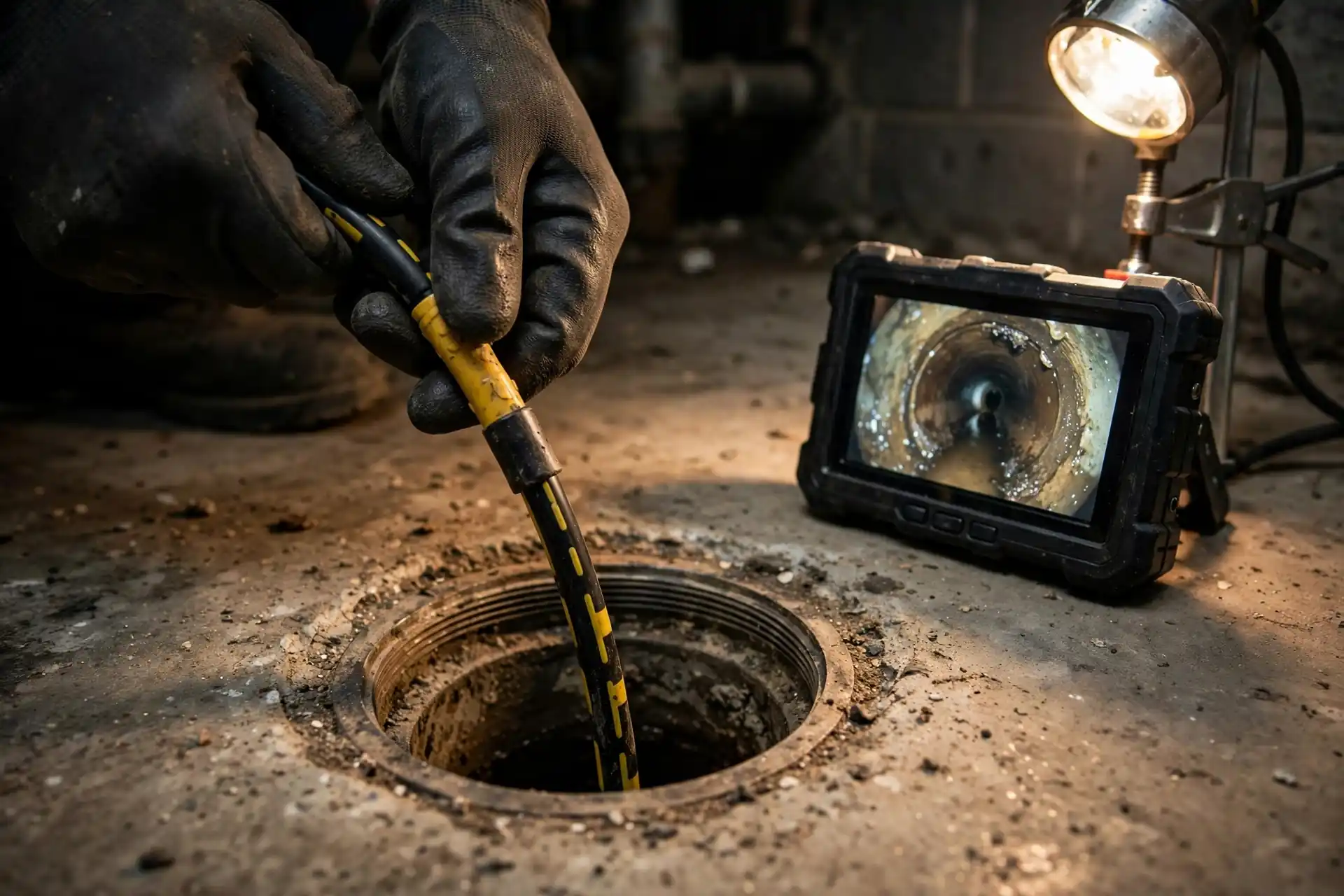
Every good sewer decision starts with seeing the pipe. A sewer camera inspection threads a waterproof, self-leveling camera on a flexible push rod through your lateral — from an indoor or outdoor cleanout all the way to the municipal main — while the technician watches the live feed and records it. In about an hour, the mystery of what's underground becomes a video file with measured distances to every defect.
Yet many Buffalo Grove homeowners have never seen one done, and some contractors still quote five-figure replacements off symptoms alone. This guide explains what happens during an inspection, what the camera can and cannot show, and how to read the footage like someone who has to live with the decision. If you take one idea from this post, make it this: never approve a sewer repair without seeing the camera footage first.
How the inspection works, step by step
The technician starts by locating your cleanout — the capped access pipe, usually three or four inches in diameter, near the foundation or out in the yard. No cleanout? The camera can go through a pulled toilet or a roof vent in a pinch, but a proper cleanout gives the straightest run and the clearest footage. If your home lacks one, installing a cleanout is often the most useful single upgrade you can make to your sewer system.
With access established, the push rod and camera head go in. The camera is self-leveling, so the image stays upright, and a built-in transmitter (sonde) broadcasts a signal that the technician tracks from above ground with a locator wand — marking the pipe's exact path and depth on your lawn with paint or flags. Distances are measured by a footage counter on the reel, so every crack, root mass, or belly gets a number: 'root intrusion at 47 feet, depth 6 feet.' The whole run is recorded, and you should receive a copy.
What the camera finds
The footage catalogs the usual suspects. Root intrusion shows as pale, fibrous masses entering at joints — unmistakable once you have seen it. Cracks and fractures appear as dark lines across the pipe wall; offsets show as a visible step where one pipe section has dropped relative to the next. Bellies reveal themselves when the camera swims through standing water in an otherwise dry line. Scale and tuberculation in cast iron look like rough, rusty narrowing; grease buildup looks like smooth, yellowish constriction.
The camera also finds things nobody expected: construction debris from a decades-old build, a section of Orangeburg pipe that has gone oval, a lateral that was never properly connected to the main. Each finding maps to a different fix — roots get cutting and lining, offsets get spot repair or bursting, bellies get regrading — which is why the footage, not the symptom, drives the recommendation. A professional camera inspection ends with findings explained in plain language, not just a video file dropped in your inbox.
What the camera cannot show
Honesty requires the limits too. A camera shows the pipe's interior, not the soil around it — it cannot tell you how much cover is over the line or whether groundwater is pressing in, though an experienced technician infers soil conditions from what the pipe is doing. It cannot see through standing water clearly; a heavily bellied line may need to be pumped down before the inspection is useful. And it cannot measure remaining pipe life — the footage shows today's condition, and deterioration rates are estimated from material, age, and soil, not read off the screen.
The camera also cannot find leaks outside the pipe with certainty. If wastewater is escaping into the soil but the pipe interior looks intact, the defect may be at a joint the camera passed without catching, or the problem may be elsewhere entirely. That is when sewer leak detection methods — pressure testing, smoke testing, dye tracing — pick up where the camera leaves off.
How to read the footage like a pro
Watch for four things. First, the distance counter: defects near the house end are cheaper to reach than defects at the street, and multiple defects spread along the run argue for full-length solutions while one localized defect argues for a spot repair. Second, the water line: a camera should travel through a mostly dry pipe; persistent standing water means a belly or back-pitch. Third, the joints: count them, because every joint in clay or cast iron is a future root entry. Fourth, the transitions: where the pipe material changes (say, cast iron to clay at the property line), expect the trouble to concentrate there.
Ask the technician to narrate as you watch together, and ask for the two numbers that matter for every defect: how far from the cleanout, and how deep. Then get the recording. Homeowners who keep their inspection footage never have to pay to re-diagnose the same line, and a second opinion — which you should always feel free to get on a major repair — starts from the same evidence instead of from scratch.
When to schedule one
The obvious trigger is symptoms: recurring backups, multiple slow drains, gurgling fixtures, or a suspiciously green patch of lawn. But the highest-value inspections are the preventive ones. Buying a Buffalo Grove home built before 1980? A camera inspection during the inspection period can reveal a failing lateral before it becomes your problem — it is a modest expense against a major underground asset. Finished a basement? Know the line's condition before you put flooring over the floor drain's upstream.
For homes with known root issues, a camera check every couple of years tracks whether the problem is stable or progressing — the trend across inspections is what justifies lining a line versus continuing to cut roots. And after any major repair, the post-repair inspection footage is your warranty baseline. Whatever the trigger, the process is the same: one visit, one video file, and decisions made with evidence instead of anxiety.
Frequently Asked Questions
Do I need to prepare anything before the inspection?
Clear access to the cleanout is the main thing — move storage, trim plantings, and make sure the technician can reach it with equipment. Know where your cleanout is; if you have never seen one, say so when you book, since the crew may plan to pull a toilet or install a cleanout first. Avoid heavy water use right before the visit so the line is as clear as possible for the camera.
Will the camera damage my pipes?
No. The camera head is small, smooth, and designed to travel through drain pipe; the push rod is flexible. Technicians will not force the camera past a complete blockage — if the line is fully blocked, they clear it first, then inspect. The inspection is strictly non-destructive; it is the diagnostic that prevents unnecessary digging, not a cause of it.
How long is the recording, and do I get to keep it?
A typical residential lateral inspection produces a video of the full run from cleanout to main, usually well under an hour of footage. Always ask for a copy — reputable companies provide it as standard. Keep it with your home records; it is the baseline for every future inspection and the evidence behind any repair recommendation.
Can a camera inspection find a leak under my slab?
It can find defects in the pipe under the slab, and the locator can mark the pipe's position — but pinpointing an exact leak point under concrete sometimes needs supplemental methods like acoustic listening or pressure testing. The camera tells you the pipe's condition; leak detection methods tell you where water is escaping. The two are often used together on slab-on-grade homes.
Sewer Line Problems Don’t Wait. Neither Should You.
Call now and reach a local sewer line specialist serving Buffalo Grove, IL and nearby northwest suburbs — 24/7.
(833) 713-2101Free to call · No obligation · 24/7 emergency line