
Sewer Gas Smell: Health Effects and What to Do
That rotten-egg smell is sewer gas — a mix of gases that ranges from nuisance to hazard. Here is what it does to your health and how to find its source.
In short: Sewer gas in a Buffalo Grove, IL home usually comes from dry drain traps, blocked vents, or a cracked sewer line — and while brief low-level exposure mainly causes headaches and nausea, high concentrations are dangerous. Call (833) 713-2101 if the smell persists after running water in unused drains.
Sewer gas smells like rotten eggs, and the smell is doing you a favor: it is a warning. The odor comes mostly from hydrogen sulfide, a gas produced when organic waste breaks down without oxygen — exactly what happens inside a sewer line. Alongside it travel methane, ammonia, and other byproducts. At the low concentrations that drift from a dry floor drain, sewer gas is mainly a miserable nuisance. At higher concentrations, or with long exposure, it becomes a genuine health hazard.
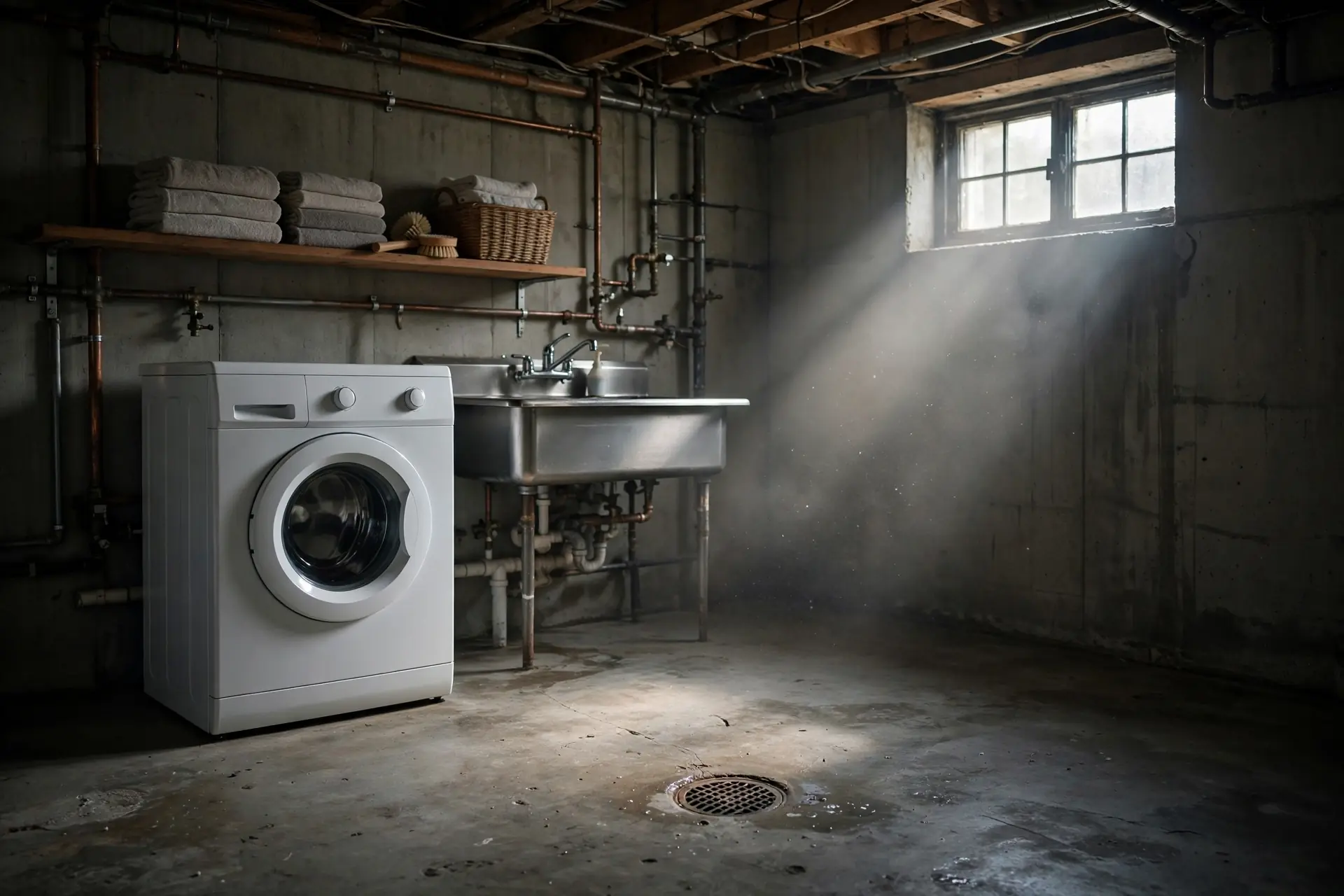
Buffalo Grove homeowners encounter sewer gas most often in basements and bathrooms: the guest bathroom nobody uses, the laundry-room floor drain, the basement that smells worse every spring. This guide covers what sewer gas does to your body at different exposure levels, the common household sources ranked by likelihood, and the steps that actually eliminate the smell rather than masking it.
What sewer gas is — and what it does to you
Sewer gas is not one gas but a cocktail, and hydrogen sulfide (H₂S) is the ingredient you smell. Humans can detect H₂S at extremely low concentrations — parts per billion — which is why even a minor sewer gas intrusion announces itself. At these nuisance levels, the documented effects are headaches, nausea, dizziness, eye and throat irritation, and loss of appetite. Unpleasant, but reversible once you leave the area and ventilate.
The danger curve steepens with concentration. At higher levels, hydrogen sulfide attacks the nervous system — and cruelly, it deadens your sense of smell, so the warning odor disappears just as the danger peaks. Methane, the other major component, is an asphyxiant in enclosed spaces and flammable at the right air mixture. This is why a strong, persistent sewer gas smell in a confined basement deserves immediate respect: ventilate the space, avoid open flames, and if anyone feels dizzy or nauseated, leave and call for help before investigating the plumbing.
The usual suspects, ranked by likelihood
In homes, the most common sewer gas source is also the simplest: a dry trap. Every drain has a U-shaped trap that holds water as a seal against sewer gases; in a floor drain or guest-bathroom fixture that goes unused for weeks, the water evaporates and the seal breaks. The fix is pouring water down the drain — a quart or two, plus a tablespoon of mineral oil to slow future evaporation. If the smell disappears after this, you found it.
Second on the list: venting problems. Your plumbing vents through the roof, equalizing pressure so traps are not siphoned dry when toilets flush. A blocked vent — nests, ice dams in a Buffalo Grove January, debris — creates pressure swings that empty traps and let gas in. Third: a cracked or disconnected pipe, inside a wall or under a slab, leaking gas continuously. And fourth, the less obvious: a toilet with a failed wax ring, rocking slightly and venting gas at the base, or a sump pit with a dry or missing sealed cover. When the easy fixes do not hold, sewer leak detection — including smoke testing, which makes gas escape paths visible — finds what noses cannot.
Why the smell comes and goes
Intermittent sewer gas confuses homeowners, but it follows physics. Barometric pressure drops before storms can push gases up through marginal traps. Wind across the roof vent can create downdrafts that pressurize the drain system. Hot weather accelerates evaporation in unused traps. And heavy water use elsewhere in the house — a washing machine discharging, multiple showers — can siphon a weak trap dry through momentum, letting gas in hours after the water use stopped.
Seasonal patterns help the diagnosis. Smell that appears every spring in a Buffalo Grove basement often traces to a floor drain trap that dried out over winter, or to frost-heave shifting an older clay lateral and opening a joint. Smell that worsens with wind points at venting. Smell that is constant and localized to one area points at a broken pipe or failed seal nearby. Track when it happens before you call — the pattern is diagnostic gold.
What to do: the elimination sequence
Work from simple to serious. Step one: pour water into every infrequently used drain — floor drains, guest bathrooms, basement laundry sinks — and add mineral oil to slow evaporation. Step two: check the obvious mechanical suspects: is a toilet rocking? Is the sump pit covered and sealed? Are there visible gaps around pipe penetrations? Step three: check the roof vent from the ground with binoculars — visible nests or damage mean a call to clear it.
If the smell persists past these steps, stop masking it with air fresheners and get a professional diagnosis. Persistent sewer gas means an ongoing pathway between the sewer system and your living space, and that pathway will not seal itself. A camera inspection of the lateral finds cracks, separations, and root intrusions that vent gas; smoke testing finds interior leaks that cameras miss. Either way, the goal is the same: find the pathway and close it, not perfume over it.
When it is an emergency
Most sewer gas complaints are nuisances solved by the sequence above. Treat it as urgent when the smell is strong and sudden, when multiple people feel symptoms (headache, nausea, dizziness, eye irritation) at the same time, or when the odor is accompanied by a hissing sound or the smell of natural gas — sewer gas and natural gas leaks can coincide near utility corridors, and natural gas is the greater immediate danger. In those cases: ventilate, avoid flames and electrical switches, get everyone out, and call emergency services first.
For strong sewer gas without a gas-utility smell, emergency sewer service can locate the source the same day — a cracked lateral venting into a basement is not a wait-until-Monday problem. Do not try to seal a suspected broken sewer pipe yourself with caulk or tape; improper repairs trap gases and can make the eventual professional fix harder. Find the pathway, fix it properly, and the smell — and the risk — goes away for good.
Frequently Asked Questions
Is it safe to stay in a house that smells like sewer gas?
Brief exposure to faint sewer gas — the kind from a dry floor drain — is unpleasant but not dangerous for most people; ventilate the area and fix the trap. Leave the space and get help if the smell is strong, if anyone has headaches, nausea, or dizziness, or if the odor appeared suddenly and intensely. When in doubt, step out and ventilate before investigating.
Why does only one bathroom smell like sewer?
A localized smell usually means a localized cause: that bathroom's trap has dried out, its toilet wax ring has failed, or a vent serving that branch is blocked. Run water in all its fixtures first — if the smell persists in just that room, the problem is in that room's plumbing or venting, which narrows the professional diagnosis considerably.
Can sewer gas come up through a toilet?
It can, if the toilet's wax ring seal has failed or the toilet is rocking on a damaged flange — the seal between the toilet base and the drain is the only thing blocking gas at that fixture. It can also enter when a blocked vent lets flushing siphon the bowl's trap. A toilet that rocks or leaks at the base needs reseating regardless of smell; the gas is just the messenger.
Does a sewer gas smell mean my sewer line is broken?
Not necessarily — dry traps and vent issues are more common causes and far cheaper fixes. But a persistent smell that survives trap refills and vent checks, especially combined with slow drains or gurgling, does point toward a cracked or separated lateral. That combination warrants a camera inspection rather than more air freshener.
Sewer Line Problems Don’t Wait. Neither Should You.
Call now and reach a local sewer line specialist serving Buffalo Grove, IL and nearby northwest suburbs — 24/7.
(833) 713-2101Free to call · No obligation · 24/7 emergency line