
Sewer Leak Detection Methods, Compared
Finding a sewer leak is detective work: the water is underground and the pipe is buried. Here is how each detection method works and when to use it.
In short: Sewer leaks in Buffalo Grove, IL are found with cameras, smoke tests, dye traces, acoustic listening, or pressure tests — each suited to different situations. A camera inspection is the usual starting point; other methods pinpoint what cameras cannot. Call (833) 713-2101 to diagnose a suspected leak.
A sewer leak announces itself indirectly: a perpetually soggy patch of lawn, a water bill that climbs for no reason, the faint smell of sewage where no drain exists, or a foundation wall that stays damp through dry spells. The water is underground, the pipe is buried, and digging on a hunch is expensive — so finding the leak precisely, before anyone excavates, is the whole game.
There is no single ideal detection method; there is the right method for the situation. A camera sees inside the pipe. Smoke testing reveals where gases escape. Dye tracing follows water's path. Acoustic listening hears leaks through soil and concrete. This guide compares the five methods Buffalo Grove technicians actually use, what each one costs in time and disruption, and how to choose.
Start with the camera — usually
For most suspected sewer leaks, the first tool is the sewer camera. It travels the lateral's interior and shows cracks, separated joints, root intrusions, and breaks directly — the defects through which wastewater escapes. When the camera finds a cracked section at 63 feet, the leak's location is known to within a foot or two, and the locator marks the spot on the surface. Most leak investigations end here, because most leaks are pipe defects a camera can see.
The camera's blind spots define when other methods enter. It cannot see leaks at joints it passes too quickly, cannot assess the soil outside the pipe, and cannot confirm a leak when the pipe interior looks intact but water is clearly escaping somewhere. A camera that shows a sound pipe while the lawn stays soggy is not a contradiction — it is a referral to the methods below. Camera inspection services remain the starting point; what follows is the escalation ladder.
Smoke testing: making the invisible visible
Smoke testing introduces non-toxic, visible vapor into the sewer system — usually through a roof vent or cleanout — and watches where it escapes. Wherever smoke emerges from the ground, a foundation crack, or a roof vent that should not be smoking, there is a pathway between the sewer system and the outside. It is the quickest way to answer the question the camera cannot: is there a breach, and roughly where?
The method shines for finding illegal or failed connections, cracked vent stacks inside walls (smoke appears in the room), and separated joints under slabs. Its limits: it shows pathways, not precise pipe defects — smoke emerging from a ten-foot stretch of lawn narrows the dig zone but does not mark the crack. Wind disperses smoke and complicates outdoor tests, and the building must be prepared so smoke does not alarm occupants. Used after a camera run, though, smoke testing often delivers the answer in under an hour.
Dye testing: following the water
Dye tracing is elegantly simple: a bright, non-staining fluorescent dye is introduced into a fixture or cleanout, and the technician watches where colored water appears — at a foundation crack, in a sump pit, surfacing in the yard. Different colors can be used in different fixtures to map which branch feeds a leak. It answers a specific question cameras struggle with: is this water actually coming from the sewer system, or is it groundwater, a water-service leak, or surface drainage?
The classic Buffalo Grove use case is the damp basement wall: is it foundation seepage or a leaking lateral saturating the soil against the foundation? Dye in the sewer system that shows up at the wall answers definitively. Dye testing is cheap, non-destructive, and decisive — but it only works when there is an observable emergence point. A leak deep under a yard with no surface expression gives dye nothing to show.
Acoustic listening: hearing what eyes cannot see
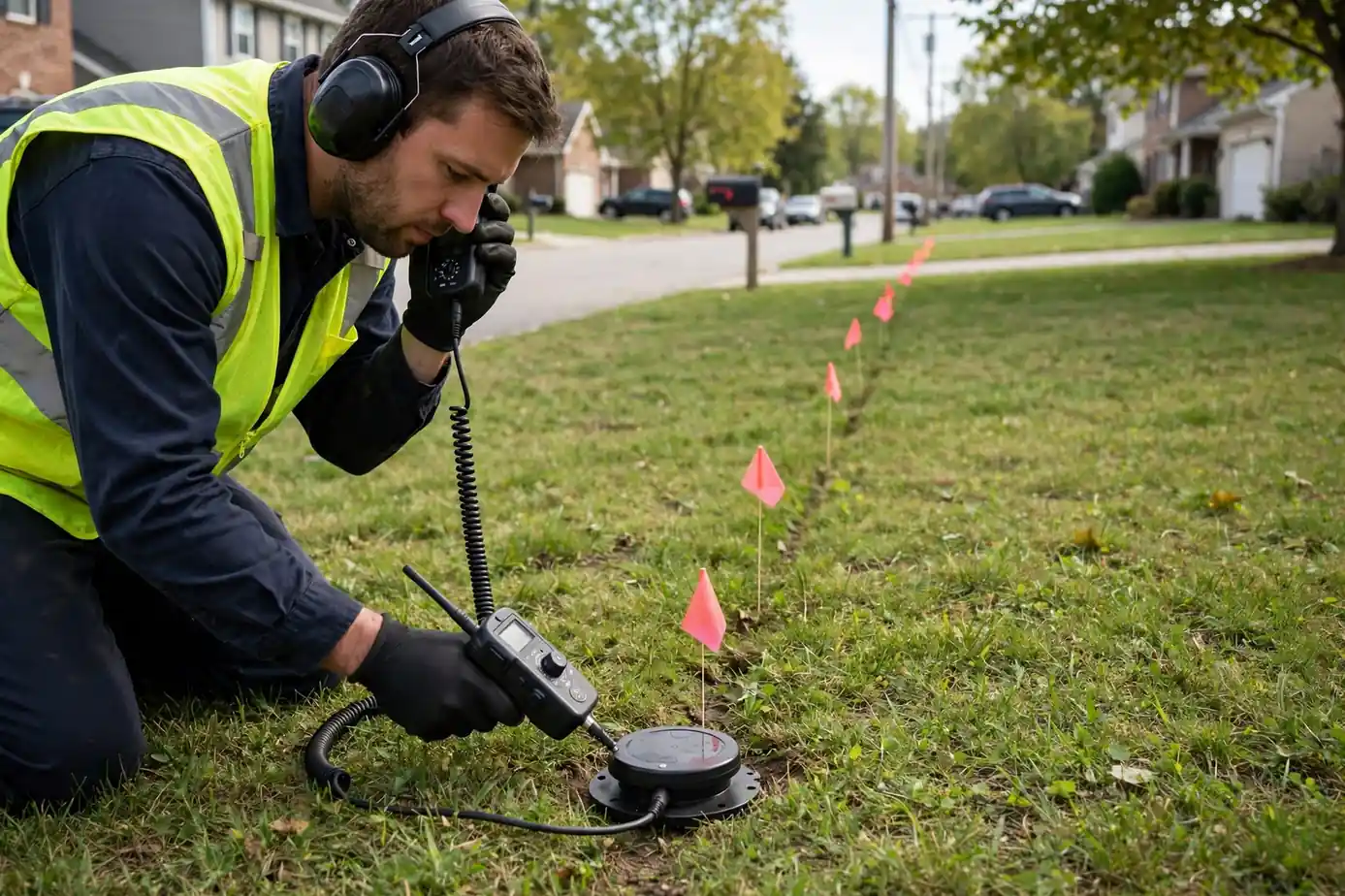
Acoustic leak detection uses ground microphones and listening rods to pick up the sound of escaping water — the hiss of a pressurized leak or the trickle of wastewater through a break. On water-service lines it is the primary method; on gravity sewer lines it is more situational, since unpressurized wastewater leaks quietly. But where a sewer lateral runs under a slab or a paved area and the camera is inconclusive, acoustic equipment can narrow the search zone without a single shovelful of dirt.
The skill is in interpretation: soil type, depth, and background noise all shape what the microphone hears, and an experienced technician distinguishes leak sounds from normal flow. Acoustic work pairs well with the locator data from a camera run — the pipe's mapped path tells the listener exactly where to listen. For slab-on-grade Buffalo Grove homes, where excavation means breaking concrete, that precision is worth real money.
Pressure and isolation testing: proving a section
When the question is not where but whether — is this section of pipe actually leaking? — pressure testing gives a yes-or-no answer. Test balls (inflatable plugs) isolate a section of line, which is then filled with water or air and monitored: a dropping level means a leak in the isolated section. By moving the plugs, the technician bisects the line until the leaking segment is identified.
This is the method of choice for verifying repairs ('prove the new section holds before backfill') and for diagnosing lines where the camera shows ambiguous joints. It is slower and more labor-intensive than the other methods — each isolated test takes setup time — so it tends to be the confirmatory step rather than the opening move. But when a contractor proposes excavating based on ambiguous footage, a pressure test that proves the leak's segment is cheap insurance against digging in the wrong place.
Choosing the right method
Match the method to the mystery. Visible pipe defect on camera? You are done — repair the defect. Sound pipe but soggy lawn? Smoke test for breach pathways, dye test to confirm the water's source. Leak under a slab or pavement where digging is costly? Acoustic listening to narrow the zone, then pressure testing to prove the segment. Damp basement of unclear origin? Dye testing to separate sewer water from groundwater.
In practice, most residential leak investigations use two methods: the camera first, then one targeted follow-up. Any contractor who wants to excavate based on symptoms alone — without camera footage or a confirming test — is asking you to fund their guessing. Professional sewer leak detection follows the evidence ladder: see inside the pipe first, then prove what the eyes could not.
Frequently Asked Questions
How much digging is needed to find a sewer leak?
Ideally, none — that is the point of detection methods. Cameras, smoke, dye, acoustic listening, and pressure testing all locate leaks from the surface or through existing access points. Excavation should only happen after a method has marked the spot. If someone proposes digging to 'see what's going on,' get a camera inspection first.
Can a leak be found if the pipe looks fine on camera?
Yes. Cameras see the pipe's interior; leaks can exist at joints the camera passes, as pinhole defects, or as water escaping where the camera cannot resolve it. Smoke testing, dye tracing, and pressure testing are designed exactly for this situation — they detect the escaping water or gas rather than the visible defect.
Will leak detection damage my yard or home?
No. All five methods are non-destructive: cameras travel inside the pipe, smoke and dye are introduced through existing access, acoustic equipment sits on the surface, and pressure testing uses inflatable plugs inside the line. The only marks left behind are locator paint or flags showing the pipe's path — which you want to keep until any repair is done.
How long does leak detection take?
A camera inspection typically takes under an hour on site. Smoke and dye tests usually add under an hour each. Acoustic surveys and pressure testing take longer — plan for a half day when multiple methods are combined. Most residential leak investigations conclude in a single visit.
Sewer Line Problems Don’t Wait. Neither Should You.
Call now and reach a local sewer line specialist serving Buffalo Grove, IL and nearby northwest suburbs — 24/7.
(833) 713-2101Free to call · No obligation · 24/7 emergency line