Sewer Line Repair · Buffalo Grove, IL

Commercial Sewer Services in Deerfield, IL

From routine jetting to full commercial lateral replacement, Deerfield businesses east of Waukegan Avenue get sewer service scheduled around their operations. Call (833) 713-2101.

  • Camera-Verified Diagnosis
  • Trenchless Options
  • Day & Night Service
Commercial Sewer Services in Deerfield, IL

In short: Commercial sewer service in Deerfield, IL 60015 means keeping the corporate corridor and downtown restaurants east of Waukegan Avenue open and draining: hydro-jetting programs, grease interceptor service, and repairs scheduled after hours. Call (833) 713-2101 to start with a camera inspection of your building's main line.

Commercial Sewer Services in Deerfield: What Local Businesses Should Know

Walk behind any restaurant in Deerfield and you will find the same setup: a grease interceptor the size of a bathtub, a mop sink that drains to the main line, and a lateral running to the street that also serves the restrooms. For the corporate corridor and downtown restaurants east of Waukegan Avenue, that lateral is often clay tile and Orangeburg laterals under dense tree canopy — decades old, narrowed by grease, and asked to carry far more than it was designed for. The first sign of trouble is rarely a full backup; it is the kitchen drain that runs a little slower each month.

That slow decline is exactly what commercial maintenance programs are for. A jetting visit in Deerfield strips the grease back to bare pipe wall, a camera pass documents the line's real condition, and the schedule repeats before the buildup returns — timed to the business cycle, not the calendar year. The corporate corridor and downtown restaurants that wait for a backup pay for it in lost service and cleanup; the corporate corridor and downtown restaurants on a program mostly forget the sewer exists, which is the whole point.

Warning Signs Your Deerfield Business Has a Sewer Problem

Grease, solids, and heavy use leave fingerprints long before a backup. In Deerfield, where the corporate corridor and downtown restaurants run on clay tile and Orangeburg laterals under dense tree canopy, these are the fingerprints to watch for.

Floor drains that won't stay clear

Mop sinks and kitchen floor drains tie straight into the lateral, so chronic slow drainage there means the main is constricted. For the corporate corridor and downtown restaurants east of Waukegan Avenue in Deerfield, snaking the fixture buys days; jetting the clay tile and Orangeburg laterals under dense tree canopy serving the building buys months.

Persistent odors staff can't source

Sewer gas that survives a deep clean is coming from the lines, not the surfaces — dry traps, a cracked vent, or buildup in clay tile and Orangeburg laterals under dense tree canopy under the building. The corporate corridor and downtown restaurants in Deerfield east of Waukegan Avenue should treat unexplained odor as a sewer symptom, because customers notice it before the health inspector does.

Grease interceptor backing up or overflowing

An interceptor that needs pumping every few weeks instead of every few months is telling you the downstream line is restricted. For the corporate corridor and downtown restaurants in Deerfield east of Waukegan Avenue, the fix is rarely a bigger trap — it is cleaning the grease-loaded clay tile and Orangeburg laterals under dense tree canopy between the trap and the street.

Multiple tenants complaining at once

When several suites or units report slow drains in the same week, the shared building sewer is the common denominator. Deerfield properties east of Waukegan Avenue with shared clay tile and Orangeburg laterals under dense tree canopy need a main-line camera inspection — fixture-level fixes will keep failing.

Parking lot or pavement settling over the line

A dip in the asphalt that follows the lateral's path to the street can mean soil washing into a broken pipe. The corporate corridor and downtown restaurants in Deerfield east of Waukegan Avenue should get that section camera-inspected: a void under pavement becomes a collapse, and collapses do not schedule themselves.

Kitchen drains slow down during rush

When the lunch or dinner rush slows the kitchen line in a Deerfield restaurant, grease is narrowing the pipe faster than the off-hours flow can clear it. The corporate corridor and downtown restaurants east of Waukegan Avenue that notice the pattern should schedule jetting before the line closes completely — a planned visit costs a fraction of a mid-service backup.

Restroom backups during busy periods

Toilets that burp or back up when the building is full point to a main line at capacity, not a fixture problem. In Deerfield commercial buildings east of Waukegan Avenue on clay tile and Orangeburg laterals under dense tree canopy, this is the classic sign the building sewer needs jetting — and a camera look at why it keeps happening.

Backups that return weeks after snaking

A cable that punches through grease leaves the walls coated — the blockage rebuilds on schedule. For the corporate corridor and downtown restaurants in Deerfield east of Waukegan Avenue on clay tile and Orangeburg laterals under dense tree canopy, recurring backups are the business case for hydro-jetting: full-diameter cleaning instead of another temporary hole.

How Commercial Sewer Services Works

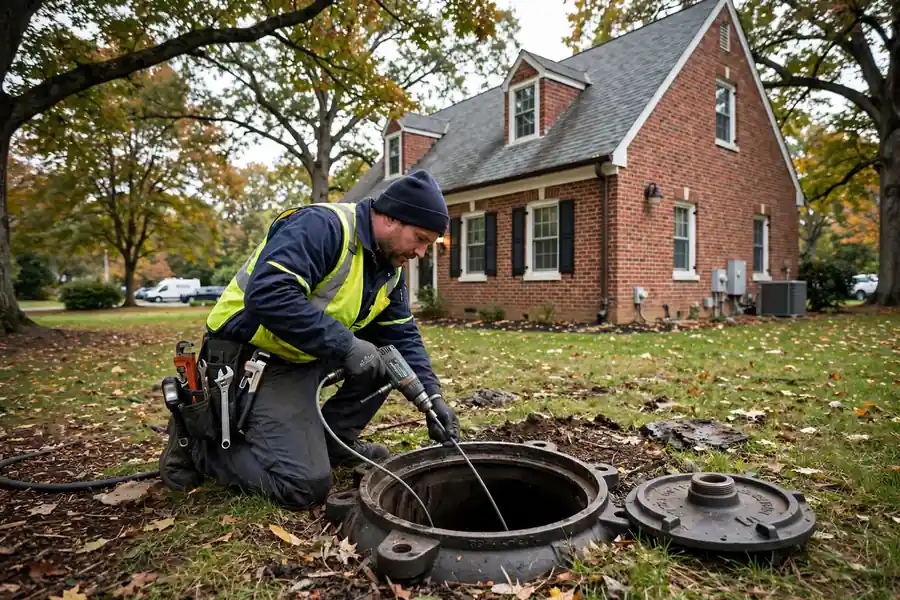
Every commercial engagement in Deerfield starts with a site survey, not a sales pitch. A technician walks the property east of Waukegan Avenue with the manager, locating cleanouts, opening the grease interceptor, and noting the fixtures that drain to each line. For the corporate corridor and downtown restaurants, that walk produces a map: which clay tile and Orangeburg laterals under dense tree canopy serve the kitchen, which serve the restrooms, and where they join before leaving the building.

The camera comes next. It travels the building sewer from the cleanout to the city main, recording grease depth, scale, root entry, bellies, and offsets — the full condition of clay tile and Orangeburg laterals under dense tree canopy under the corporate corridor and downtown restaurants in Deerfield. The footage is shared with the manager, so decisions about jetting, repair, or replacement are made with evidence. Most commercial lines east of Waukegan Avenue show a mix: heavy grease near the kitchen tie-in, roots near the street.

Hydro-jetting is the core commercial service: a high-pressure hose scours the full interior diameter of the pipe, stripping grease and scale back to bare wall and flushing it to the municipal main. On clay tile and Orangeburg laterals under dense tree canopy serving the corporate corridor and downtown restaurants east of Waukegan Avenue, a jetting pass is sized to the line — bigger nozzles, longer runs, and interceptor-to-main coverage that a residential visit never needs. Where roots have entered joints, mechanical cutting precedes the jetter.

Then comes the part residential pages skip: the program. The corporate corridor and downtown restaurants in Deerfield east of Waukegan Avenue get a written schedule — jetting intervals matched to grease load, interceptor pumping on a calendar, and an annual camera check that catches new problems while they are small. Repairs, when needed, are planned around business hours: after-close excavation, weekend lining work, and trenchless options that keep the parking lot intact.

Deerfield's Sewer Conditions — and How They Change This Service

Area Facts

ZIP code
60015
Housing stock
1950s-1970s stock: 1950s brick Cape Cods east of Waukegan Ave
Typical sewer lines
Clay tile laterals in 50s stock
Soil
Fine glacial till (Zurich/Wauconda series)
Key local factor
Deerfield is a root-intrusion market: 50-70-year-old clay tile and Orangeburg laterals under one of the densest mature tree canopies in the service area, with long shallow ranch runs.

The clay tile and Orangeburg laterals under dense tree canopy under Deerfield define how commercial work is done here. Long shallow ranch laterals under dense tree canopy means the camera survey matters more than the jetter on the first visit: the technician maps exactly where grease, roots, or scale concentrate in the lines serving the corporate corridor and downtown restaurants east of Waukegan Avenue, so cleaning and repair target those sections instead of treating the whole run blindly.

Decades-old landscaping that trenchless methods spare shapes the logistics of every commercial job. Because 1950s-1970s stock: 1950s brick Cape Cods east of Waukegan Ave and the buildings around them come with that constraint in Deerfield, crews plan access, staging, and work hours before they arrive — confirming cleanout locations, scheduling around occupants and customers, and choosing methods that keep the property open. It is routine work for teams serving 60015 every week, but it is planned work, not improvised.

NW-suburb freeze-thaw In Deerfield, Fine glacial till (Zurich/Wauconda series) east of Waukegan Avenue, which is why commercial programs here watch how water moves around the building sewer, not just what flows through it. A cleared line with proper flow handles spring melt and summer storms the way it was designed to; a partially blocked one turns the first heavy rain into an emergency call — during business hours.

From First Call to Maintenance Program

Step 1: Walk the building with you

Call (833) 713-2101 and a specialist visits your Deerfield property east of Waukegan Avenue — mapping lines, opening interceptors, and hearing the trouble history from the people who live with the drains. For the corporate corridor and downtown restaurants, this survey is the foundation every later decision rests on.

Step 2: Camera inspection and diagnosis

The building sewer gets a full camera pass from cleanout to city main, and you watch the footage. The corporate corridor and downtown restaurants east of Waukegan Avenue see exactly what is inside their clay tile and Orangeburg laterals under dense tree canopy: grease depth, root entry points, bellies, and breaks — no guesswork in the diagnosis.

Step 3: Written plan and schedule

You get a plain-language proposal: what needs cleaning now, what needs repair, and what belongs on a maintenance calendar. Work windows are set around your business hours in Deerfield — after close, weekends, or phased so the operation never stops.

Step 4: Cleaning and immediate repairs

Hydro-jetting restores full diameter to the clay tile and Orangeburg laterals under dense tree canopy serving your building, mechanical cutting clears root masses, and interceptors are pumped and serviced. Urgent defects found on camera — a broken section threatening collapse — are stabilized first.

Step 5: Planned repairs, trenchless where possible

Sections that cleaning cannot save get repaired on schedule — pipe bursting or lining under parking lots and landscaping east of Waukegan Avenue, open-cut only where it makes sense. The corporate corridor and downtown restaurants in Deerfield approve the method knowing the disruption in advance.

Step 6: Maintenance program kickoff

The line is re-cameraed to verify the work, and the maintenance calendar starts: jetting intervals matched to your grease load, interceptor pumping dates, and an annual inspection. Your Deerfield building east of Waukegan Avenue joins the route — the sewer becomes a managed asset, not a recurring surprise.

FAQs

Frequently Asked Questions

Do you service grease interceptors in Deerfield?

Yes — pumping, cleaning, and the line between the interceptor and the street, which is where most 'interceptor problems' actually live. For the corporate corridor and downtown restaurants east of Waukegan Avenue in Deerfield, we size the service to the trap and the kitchen's output on clay tile and Orangeburg laterals under dense tree canopy, and put pumping on a calendar so it never becomes an emergency.

Who is responsible for the lateral — tenant or owner?

It depends on the lease, but the building owner typically owns the lateral to the city main in Deerfield. Tenants among the corporate corridor and downtown restaurants east of Waukegan Avenue usually handle fixtures and grease practices inside their space. When responsibility is disputed, the camera footage settles it: the location of the defect decides whose line it is.

How often should a restaurant's sewer line be jetted in Deerfield?

It depends on grease load, not the calendar alone. A busy kitchen among the corporate corridor and downtown restaurants east of Waukegan Avenue on clay tile and Orangeburg laterals under dense tree canopy often needs jetting every few months; lighter food operations can go longer. The first camera inspection sets the real interval: if the walls were half-closed with grease, the schedule tightens; if they were mostly clear, it relaxes.

What does a commercial sewer maintenance program include?

Scheduled hydro-jetting, interceptor service, and an annual camera inspection of the building sewer — with the footage and a written condition report after every visit. For Deerfield properties east of Waukegan Avenue with clay tile and Orangeburg laterals under dense tree canopy, the program also tracks trouble spots over time, so a joint that collects roots gets watched instead of rediscovered.

Can you work without closing our business?

That is the default plan, not a favor. For the corporate corridor and downtown restaurants in Deerfield east of Waukegan Avenue, cleaning and inspection happen after close or before open; larger repairs are phased or scheduled over weekends. Emergency containment — stopping an active backup — happens immediately regardless of the hour, then the permanent fix is planned around your operation.

What should staff stop putting down the drains?

Grease, food solids, coffee grounds, and 'flushable' wipes — the four horsemen of commercial blockages in clay tile and Orangeburg laterals under dense tree canopy. The corporate corridor and downtown restaurants in Deerfield east of Waukegan Avenue also do well to keep mop water with floor finish, paint, and harsh chemical openers out of the lines; a staff huddle on drain habits is the simplest sewer maintenance there is.

How is commercial sewer service different from residential?

Scale, scheduling, and documentation. Commercial lines in Deerfield are larger, carry grease and solids residential lines never see, and serve the corporate corridor and downtown restaurants that cannot close for a repair. Service is scheduled around business hours east of Waukegan Avenue, and every visit leaves camera footage and a written record — the paper trail property managers and multi-location operators need.

Can trenchless repair work under our parking lot?

Usually yes — that is exactly what trenchless methods are for. Pipe bursting and lining replace clay tile and Orangeburg laterals under dense tree canopy under pavement east of Waukegan Avenue through small access pits instead of trenching the lot. The camera inspection confirms the line is a candidate: it needs enough structural integrity to guide the new pipe.

Get Your Deerfield Sewer Line Back on Track

Every backup a Deerfield business avoids is a day of revenue kept. The corporate corridor and downtown restaurants east of Waukegan Avenue on clay tile and Orangeburg laterals under dense tree canopy stay ahead of trouble with scheduled jetting and interceptor service matched to their real grease load — not a generic calendar. To put your building on a program, call (833) 713-2101; the first step is a conversation about your lines and your hours.

Sewer Line Problems Don’t Wait. Neither Should You.

Call now and reach a local sewer line specialist serving Buffalo Grove, IL and nearby northwest suburbs — 24/7.

(833) 713-2101

Free to call · No obligation · 24/7 emergency line

Serving Deerfield, IL 60015

Call Now · (833) 713-2101