
Sewer Camera Inspection in Palatine, IL
From mysterious backups to pre-purchase peace of mind, Palatine homeowners near downtown Palatine and the Metra station get clear video evidence of what is happening inside their 1960s-70s clay tile and Orangeburg laterals.
- Camera-verified work
- Trenchless options
- Serving 60067
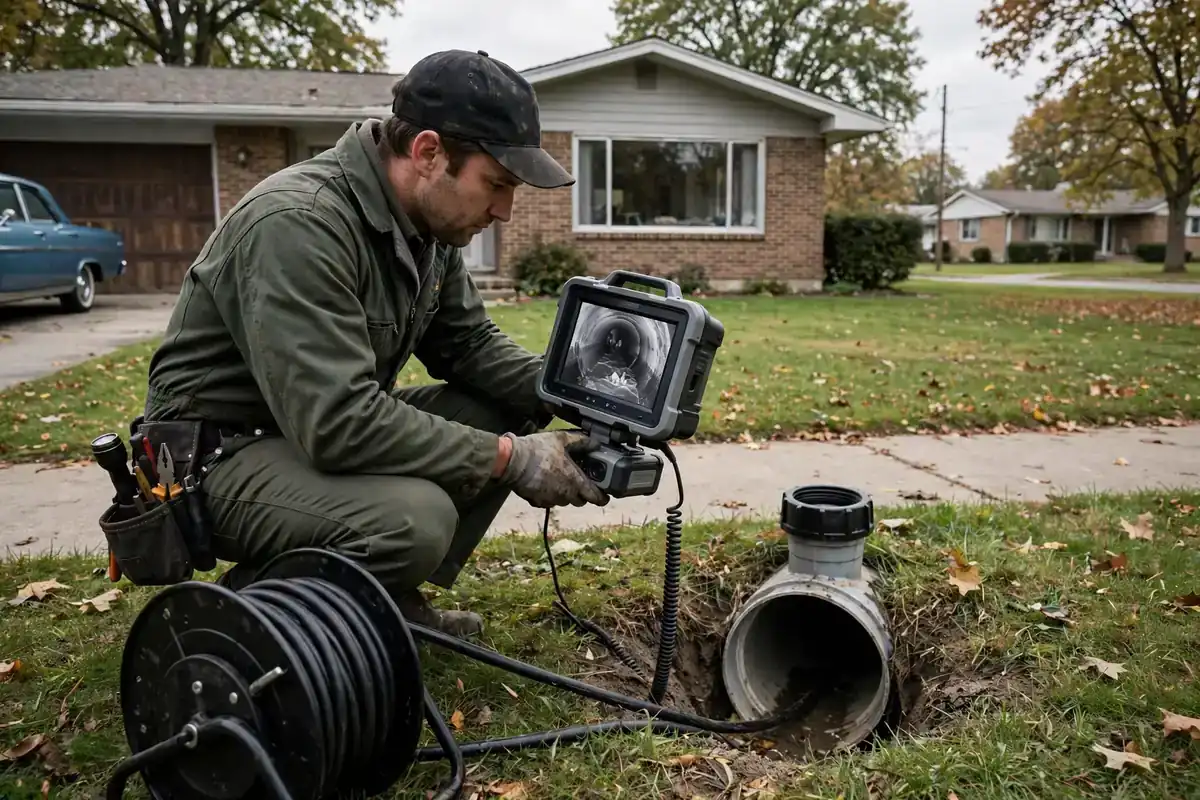
In short: This page covers sewer camera inspection in Palatine, IL 60067: a waterproof camera travels your 1960s-70s clay tile and Orangeburg laterals, recording cracks, root intrusion, offsets, and bellies in 1960s-70s subdivisions laterals. When you call (833) 713-2101, the first step is describing your symptoms — the inspection then gives you video proof of what is actually wrong.
What sewer camera inspection means for Palatine homes
Everything about a sewer line is hidden, which is why sewer decisions made blind go wrong so often. In Palatine, 1960s-70s subdivisions sit on 1960s-70s clay tile and Orangeburg laterals, and when something goes wrong underground, the symptoms — slow drains, gurgling, a backup after heavy rain — can point to half a dozen different causes. Guessing means paying for the wrong fix; looking means knowing.
A camera inspection replaces the guess with a recording. A technician feeds a self-leveling, waterproof camera through a cleanout into your 1960s-70s clay tile and Orangeburg laterals, and you watch the inside of your lateral on a monitor in real time: every joint, every root tendril, every crack, measured by distance from the access point. For 1960s-70s subdivisions in Palatine near downtown Palatine and the Metra station, that footage becomes the basis for every decision after — clean it, line it, repair a section, or leave it alone with confidence.
Signs your Palatine home needs sewer camera inspection
A camera inspection earns its keep in two ways: preventing a bad purchase and preventing a wrong repair. Palatine homeowners near downtown Palatine and the Metra station with 1960s-70s subdivisions on 1960s-70s clay tile and Orangeburg laterals usually arrive at one of these doors — each one cheaper to open with video evidence than without.
It has been years since anyone looked
1960s-70s clay tile and Orangeburg laterals do not improve with age, and 1960s-70s subdivisions in Palatine near downtown Palatine and the Metra station whose laterals have never been inspected are managing an unknown. A baseline camera run documents the line's condition today — whole subdivisions of clay tile and Orangeburg aging out together and all — so future symptoms get compared against facts, not memory.
Recurring clogs in the same fixtures
A drain that clogs, gets cleared, and clogs again is describing its pipe, not its luck. In Palatine's 1960s-70s clay tile and Orangeburg laterals, repeat blockages near downtown Palatine and the Metra station usually trace to a root entry, an offset joint, or a belly that the camera will show in the first pass through your 1960s-70s subdivisions lateral.
A suspiciously green patch of lawn
Wastewater fertilizes grass. When Palatine homeowners near downtown Palatine and the Metra station spot one lush stripe crossing the yard, the camera run through their 1960s-70s clay tile and Orangeburg laterals usually finds the leaking joint directly below it — pinpointing the dig site for 1960s-70s subdivisions instead of excavating on a hunch.
Slow drains across multiple fixtures
One slow drain is a trap problem; several slow drains are a lateral problem. For 1960s-70s subdivisions on 1960s-70s clay tile and Orangeburg laterals in Palatine near downtown Palatine and the Metra station, multi-fixture slowness sends the camera down the main line, where it typically finds the scale, roots, or partial collapse responsible.
A contractor quoted major work unseen
Any quote for lining or replacement on your 1960s-70s clay tile and Orangeburg laterals that was written without video deserves a second opinion with video. Palatine homeowners near downtown Palatine and the Metra station use an independent camera inspection to verify what 1960s-70s subdivisions laterals actually need before authorizing major work.
Unexplained sewage odors
Persistent sewer gas means wastewater is sitting or escaping where it shouldn't. Around 1960s-70s subdivisions in Palatine near downtown Palatine and the Metra station, the camera finds the cause inside 1960s-70s clay tile and Orangeburg laterals — a dry trap is a guess, but video of a cracked joint or a belly full of standing water is an answer.
How sewer camera inspection works
The visit starts at the access point. The technician locates the cleanout serving your 1960s-70s subdivisions — basement, crawl space, or yard — and in Palatine near downtown Palatine and the Metra station there is almost always one; if not, a toilet pull or floor drain provides entry to the 1960s-70s clay tile and Orangeburg laterals. The camera head, about the size of a golf ball, carries its own light and a self-leveling lens so the image on the monitor stays oriented the way you would see it walking through the pipe.
As the camera travels your 1960s-70s clay tile and Orangeburg laterals, the monitor shows everything in real time and the locator above ground tracks the camera's sonde — a small transmitter in the head — to mark the exact position and depth of anything interesting. For 1960s-70s subdivisions in Palatine near downtown Palatine and the Metra station, that means a root intrusion is not just 'somewhere in the line' but a measured distance from the cleanout at a known depth, which is exactly the precision a repair crew needs.
The technician narrates what the video shows: the pipe material changing along the run, joints opening or offsetting, root tendrils thickening into masses, scale flaking off cast iron, standing water marking a belly. Palatine homeowners watch alongside and ask questions — the inspection is as much an education in your 1960s-70s subdivisions lateral as it is a diagnostic.
You keep the recording. The video file with distance stamps, plus the technician's written summary of findings for your 1960s-70s clay tile and Orangeburg laterals, goes home with you — the documentation that backs every recommendation. When 1960s-70s subdivisions owners in Palatine near downtown Palatine and the Metra station later compare repair quotes, they compare them against the same footage, which keeps every contractor honest.
How Palatine changes the sewer camera inspection plan
Whole subdivisions of clay tile and Orangeburg aging out together changes what the camera is looking for in Palatine. The technician does not run a generic pass — the inspection targets the known failure pattern of your 1960s-70s clay tile and Orangeburg laterals, checking the joints and depths where 1960s-70s subdivisions laterals near downtown Palatine and the Metra station historically give trouble first. Local knowledge turns a video into a diagnosis.
Creekside infiltration near the Buffalo Creek headwaters shapes how the inspection is scheduled and accessed. Crews serving Palatine near downtown Palatine and the Metra station plan around it as a matter of routine — confirming access points beforehand and choosing entry methods that suit 1960s-70s subdivisions — so the camera run happens without disrupting the property or its occupants.
Conditions underground follow the local ground. Glacial till silty clay loam; Buffalo Creek headwaters in Palatine - creekside lots flood. near downtown Palatine and the Metra station, and NW-suburb freeze-thaw; spring creek flooding.: saturated soils press infiltration through every open joint of 1960s-70s clay tile and Orangeburg laterals, while freeze-thaw opens new ones each winter. The camera inspection for 1960s-70s subdivisions in 60067 reads those signatures — infiltration staining, joint separation — the way a local reader reads a familiar text.
Area Facts
- ZIP Code
- 60067
- Housing stock
- Median built year 1977; 41.6% built 1960-79, 31% 1980-99; downtown district median 1962.
- Common pipe materials
- Clay tile + Orangeburg in the 60s-70s bulk; cast-iron interiors; PVC on 80s-90s edges.
- Soil
- Glacial till silty clay loam; Buffalo Creek headwaters in Palatine - creekside lots flood.
What happens when you call
Describe what you are seeing
Call (833) 713-2101 and tell us the symptoms at your Palatine home — or that you are buying or selling and want the 1960s-70s clay tile and Orangeburg laterals checked. That context tells the technician what to focus the camera on when they reach your 1960s-70s subdivisions.
Locate the access point
The technician finds the cleanout or most accessible entry to your 1960s-70s clay tile and Orangeburg laterals — in Palatine near downtown Palatine and the Metra station, 1960s-70s subdivisions access is confirmed before equipment comes out, so the visit starts productively.
Run the camera
The camera travels the full lateral while you watch the monitor: every joint, crack, and root in your 1960s-70s clay tile and Orangeburg laterals, with distances marked. Palatine homeowners near downtown Palatine and the Metra station see their 1960s-70s subdivisions line's condition with their own eyes.
Locate problems from above
The sonde in the camera head lets the technician mark the surface position and depth of each finding — so a cracked section of 1960s-70s clay tile and Orangeburg laterals under your Palatine yard near downtown Palatine and the Metra station is mapped to the exact dig or lining point.
Review the findings together
You and the technician go over the footage: what is normal wear in 1960s-70s clay tile and Orangeburg laterals, what needs watching, and what needs action for your 1960s-70s subdivisions. No jargon, no pressure — just the video and a plain-English read of your Palatine lateral.
Keep the recording and plan
The video and written summary stay with you. Whether the next step is cleaning, lining, a sectional repair, or simply a recheck interval for 1960s-70s clay tile and Orangeburg laterals serving 1960s-70s subdivisions in Palatine near downtown Palatine and the Metra station, you decide from evidence.
Frequently Asked Questions
Can the camera get through roots or standing water?
The camera shows roots and water; it does not remove them. If your 1960s-70s clay tile and Orangeburg laterals are heavily root-bound, the technician may recommend a cutting or jetting pass first so the lens can see the wall — common in Palatine near downtown Palatine and the Metra station where whole subdivisions of clay tile and Orangeburg aging out together. The inspection then documents the cleaned line's true condition.
How often should Palatine homeowners inspect their sewer line?
For 1960s-70s subdivisions on 1960s-70s clay tile and Orangeburg laterals, every two to four years is a sensible rhythm — more often if the last video showed developing defects near downtown Palatine and the Metra station. Think of it as a checkup: the thing that keeps small findings small.
What will a camera inspection find in Palatine 1960s-70s clay tile and Orangeburg laterals?
The usual local suspects: whole subdivisions of clay tile and Orangeburg aging out together. The camera documents each one with distance and depth markers on video, so your 1960s-70s subdivisions lateral near downtown Palatine and the Metra station gets a defect map rather than a vague verdict.
Do I need to prepare anything before the inspection in Palatine?
Just access. Clear the area around the cleanout — basement corner, crawl-space hatch, or yard cap — so the technician can reach your 1960s-70s clay tile and Orangeburg laterals without delay. 1960s-70s subdivisions in Palatine near downtown Palatine and the Metra station with creekside infiltration near the Buffalo Creek headwaters should mention it when booking so the crew plans accordingly.
Will the inspection tell me whether to line or replace?
That is exactly what it is for. Video of your 1960s-70s clay tile and Orangeburg laterals shows whether the damage is the kind lining bridges — cracks, offsets, root entries — or the kind that needs excavation. Palatine homeowners near downtown Palatine and the Metra station use the footage to get comparable quotes for their 1960s-70s subdivisions, because every bidder is pricing the same visible defects.
Is a camera inspection useful if my drains work fine?
It is how you keep them working fine. A baseline inspection of 1960s-70s clay tile and Orangeburg laterals under 1960s-70s subdivisions in Palatine near downtown Palatine and the Metra station catches whole subdivisions of clay tile and Orangeburg aging out together years before symptoms start — and gives you a dated record that makes future troubleshooting faster and cheaper.
Whole subdivisions of clay tile and Orangeburg aging out together does not announce itself until it has to — usually at the least convenient moment. Palatine homeowners near downtown Palatine and the Metra station who inspect their 1960s-70s clay tile and Orangeburg laterals on purpose, rather than after a backup, buy themselves options: clean, line, repair, or simply watch. If your 1960s-70s subdivisions lateral is an unknown, call (833) 713-2101 and make it known.
Related services in Palatine
Pipe Lining in Palatine, IL
Trenchless CIPP lining that renews 1960s-70s clay tile and Orangeburg laterals in Palatine — no trench across your yard.
Learn moreSewer Leak Detection in Palatine, IL
Pinpoint leak detection for 1960s-70s clay tile and Orangeburg laterals in Palatine — acoustic, camera, and dye methods.
Learn moreSewer Line Problems Don’t Wait. Neither Should You.
Call now and reach a local sewer line specialist serving Buffalo Grove, IL and nearby northwest suburbs — 24/7.
(833) 713-2101Free to call · No obligation · 24/7 emergency line
Serving Palatine, IL 60067