
Sewer Camera Inspection in Highland Grove, IL
Buying, selling, or troubleshooting in Highland Grove? A camera inspection shows the true condition of clay-tile-to-PVC transition joints under 1978-86 split-levels and two-stories near Tripp School and the neighborhood bike paths, recorded for your records.
- Camera-verified work
- Trenchless options
- Serving 60089
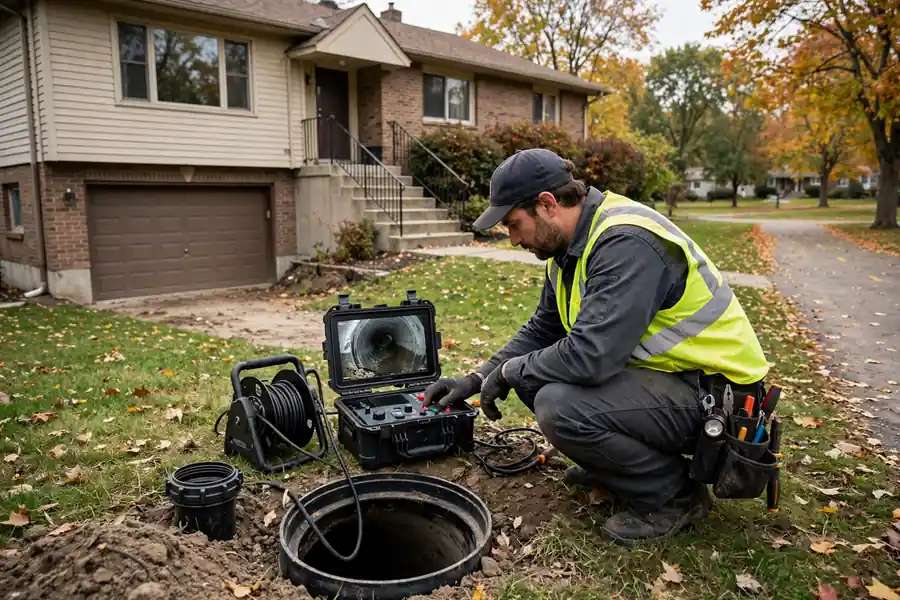
In short: If drains misbehave or you are buying a home in 60089, this page explains camera inspection for Highland Grove: how video pinpoints trouble in clay-tile-to-PVC transition joints serving 1978-86 split-levels and two-stories. The first step when you call (833) 713-2101 is a short symptom review, followed by the camera run itself.
What sewer camera inspection means for Highland Grove homes
There are moments when skipping the camera costs more than the inspection ever could. Buying a 1978-86 split-levels and two-stories property in Highland Grove without seeing its clay-tile-to-PVC transition joints means inheriting whatever the previous owner never fixed — and the 1978-86 clay-to-PVC transition joint where roots enter means there is often something to inherit. A pre-purchase inspection near Tripp School and the neighborhood bike paths is the smartest insurance in the whole transaction.
The same logic applies before any repair. No honest company should quote lining or replacement on your clay-tile-to-PVC transition joints without video evidence, and no homeowner should approve it without seeing the footage. For 1978-86 split-levels and two-stories in 60089, the inspection is what turns a sales pitch into a diagnosis — one careful pass through the line that keeps every later decision pointed the right way.
Signs your Highland Grove home needs sewer camera inspection
Nobody schedules a camera inspection for fun — something prompts it. In Highland Grove, where 1978-86 split-levels and two-stories run on clay-tile-to-PVC transition joints, these are the situations near Tripp School and the neighborhood bike paths where looking inside first pays for itself many times over.
Recurring clogs in the same fixtures
A drain that clogs, gets cleared, and clogs again is describing its pipe, not its luck. In Highland Grove's clay-tile-to-PVC transition joints, repeat blockages near Tripp School and the neighborhood bike paths usually trace to a root entry, an offset joint, or a belly that the camera will show in the first pass through your 1978-86 split-levels and two-stories lateral.
You are buying a home in Highland Grove
The lateral is the most expensive plumbing component you cannot see during a showing. 1978-86 split-levels and two-stories in Highland Grove near Tripp School and the neighborhood bike paths can hide clay-tile-to-PVC transition joints problems — the 1978-86 clay-to-PVC transition joint where roots enter — that a standard home inspection never checks. A pre-purchase camera run shows cracks, offsets, and root intrusion before you inherit them, while you still have negotiating leverage.
A suspiciously green patch of lawn
Wastewater fertilizes grass. When Highland Grove homeowners near Tripp School and the neighborhood bike paths spot one lush stripe crossing the yard, the camera run through their clay-tile-to-PVC transition joints usually finds the leaking joint directly below it — pinpointing the dig site for 1978-86 split-levels and two-stories instead of excavating on a hunch.
Slow drains across multiple fixtures
One slow drain is a trap problem; several slow drains are a lateral problem. For 1978-86 split-levels and two-stories on clay-tile-to-PVC transition joints in Highland Grove near Tripp School and the neighborhood bike paths, multi-fixture slowness sends the camera down the main line, where it typically finds the scale, roots, or partial collapse responsible.
Unexplained sewage odors
Persistent sewer gas means wastewater is sitting or escaping where it shouldn't. Around 1978-86 split-levels and two-stories in Highland Grove near Tripp School and the neighborhood bike paths, the camera finds the cause inside clay-tile-to-PVC transition joints — a dry trap is a guess, but video of a cracked joint or a belly full of standing water is an answer.
A contractor quoted major work unseen
Any quote for lining or replacement on your clay-tile-to-PVC transition joints that was written without video deserves a second opinion with video. Highland Grove homeowners near Tripp School and the neighborhood bike paths use an independent camera inspection to verify what 1978-86 split-levels and two-stories laterals actually need before authorizing major work.
How sewer camera inspection works
The visit starts at the access point. The technician locates the cleanout serving your 1978-86 split-levels and two-stories — basement, crawl space, or yard — and in Highland Grove near Tripp School and the neighborhood bike paths there is almost always one; if not, a toilet pull or floor drain provides entry to the clay-tile-to-PVC transition joints. The camera head, about the size of a golf ball, carries its own light and a self-leveling lens so the image on the monitor stays oriented the way you would see it walking through the pipe.
As the camera travels your clay-tile-to-PVC transition joints, the monitor shows everything in real time and the locator above ground tracks the camera's sonde — a small transmitter in the head — to mark the exact position and depth of anything interesting. For 1978-86 split-levels and two-stories in Highland Grove near Tripp School and the neighborhood bike paths, that means a root intrusion is not just 'somewhere in the line' but a measured distance from the cleanout at a known depth, which is exactly the precision a repair crew needs.
The technician narrates what the video shows: the pipe material changing along the run, joints opening or offsetting, root tendrils thickening into masses, scale flaking off cast iron, standing water marking a belly. Highland Grove homeowners watch alongside and ask questions — the inspection is as much an education in your 1978-86 split-levels and two-stories lateral as it is a diagnostic.
You keep the recording. The video file with distance stamps, plus the technician's written summary of findings for your clay-tile-to-PVC transition joints, goes home with you — the documentation that backs every recommendation. When 1978-86 split-levels and two-stories owners in Highland Grove near Tripp School and the neighborhood bike paths later compare repair quotes, they compare them against the same footage, which keeps every contractor honest.
How Highland Grove changes the sewer camera inspection plan
The 1978-86 clay-to-PVC transition joint where roots enter changes what the camera is looking for in Highland Grove. The technician does not run a generic pass — the inspection targets the known failure pattern of your clay-tile-to-PVC transition joints, checking the joints and depths where 1978-86 split-levels and two-stories laterals near Tripp School and the neighborhood bike paths historically give trouble first. Local knowledge turns a video into a diagnosis.
Finished basements with dual sump pumps shapes how the inspection is scheduled and accessed. Crews serving Highland Grove near Tripp School and the neighborhood bike paths plan around it as a matter of routine — confirming access points beforehand and choosing entry methods that suit 1978-86 split-levels and two-stories — so the camera run happens without disrupting the property or its occupants.
Conditions underground follow the local ground. Silty clay loam till; somewhat-poor drainage; sump discharge saturates side yards. near Tripp School and the neighborhood bike paths, and Freeze-thaw heave works the clay-tile/PVC joint every winter; spring melt loads the sumps.: saturated soils press infiltration through every open joint of clay-tile-to-PVC transition joints, while freeze-thaw opens new ones each winter. The camera inspection for 1978-86 split-levels and two-stories in 60089 reads those signatures — infiltration staining, joint separation — the way a local reader reads a familiar text.
Area Facts
- ZIP Code
- 60089
- Housing stock
- Split-levels and 2-stories built 1978-1986 (listings 1978, 1980, 1984, 1986; some 1990s infill); near Tripp school; parks and bike paths.
- Common pipe materials
- Transition era: clay tile street laterals meeting PVC/ABS house sewers; dissimilar-material joints = prime root-entry points; cast-iron interior stacks aging out.
- Soil
- Silty clay loam till; somewhat-poor drainage; sump discharge saturates side yards.
What happens when you call
Describe what you are seeing
Call (833) 713-2101 and tell us the symptoms at your Highland Grove home — or that you are buying or selling and want the clay-tile-to-PVC transition joints checked. That context tells the technician what to focus the camera on when they reach your 1978-86 split-levels and two-stories.
Locate the access point
The technician finds the cleanout or most accessible entry to your clay-tile-to-PVC transition joints — in Highland Grove near Tripp School and the neighborhood bike paths, 1978-86 split-levels and two-stories access is confirmed before equipment comes out, so the visit starts productively.
Run the camera
The camera travels the full lateral while you watch the monitor: every joint, crack, and root in your clay-tile-to-PVC transition joints, with distances marked. Highland Grove homeowners near Tripp School and the neighborhood bike paths see their 1978-86 split-levels and two-stories line's condition with their own eyes.
Locate problems from above
The sonde in the camera head lets the technician mark the surface position and depth of each finding — so a cracked section of clay-tile-to-PVC transition joints under your Highland Grove yard near Tripp School and the neighborhood bike paths is mapped to the exact dig or lining point.
Review the findings together
You and the technician go over the footage: what is normal wear in clay-tile-to-PVC transition joints, what needs watching, and what needs action for your 1978-86 split-levels and two-stories. No jargon, no pressure — just the video and a plain-English read of your Highland Grove lateral.
Keep the recording and plan
The video and written summary stay with you. Whether the next step is cleaning, lining, a sectional repair, or simply a recheck interval for clay-tile-to-PVC transition joints serving 1978-86 split-levels and two-stories in Highland Grove near Tripp School and the neighborhood bike paths, you decide from evidence.
Frequently Asked Questions
What will a camera inspection find in Highland Grove clay-tile-to-PVC transition joints?
The usual local suspects: the 1978-86 clay-to-PVC transition joint where roots enter. The camera documents each one with distance and depth markers on video, so your 1978-86 split-levels and two-stories lateral near Tripp School and the neighborhood bike paths gets a defect map rather than a vague verdict.
How often should Highland Grove homeowners inspect their sewer line?
For 1978-86 split-levels and two-stories on clay-tile-to-PVC transition joints, every two to four years is a sensible rhythm — more often if the last video showed developing defects near Tripp School and the neighborhood bike paths. Think of it as a checkup: the thing that keeps small findings small.
Will the inspection tell me whether to line or replace?
That is exactly what it is for. Video of your clay-tile-to-PVC transition joints shows whether the damage is the kind lining bridges — cracks, offsets, root entries — or the kind that needs excavation. Highland Grove homeowners near Tripp School and the neighborhood bike paths use the footage to get comparable quotes for their 1978-86 split-levels and two-stories, because every bidder is pricing the same visible defects.
Can the camera get through roots or standing water?
The camera shows roots and water; it does not remove them. If your clay-tile-to-PVC transition joints are heavily root-bound, the technician may recommend a cutting or jetting pass first so the lens can see the wall — common in Highland Grove near Tripp School and the neighborhood bike paths where the 1978-86 clay-to-PVC transition joint where roots enter. The inspection then documents the cleaned line's true condition.
Is a camera inspection useful if my drains work fine?
It is how you keep them working fine. A baseline inspection of clay-tile-to-PVC transition joints under 1978-86 split-levels and two-stories in Highland Grove near Tripp School and the neighborhood bike paths catches the 1978-86 clay-to-PVC transition joint where roots enter years before symptoms start — and gives you a dated record that makes future troubleshooting faster and cheaper.
Do I need to prepare anything before the inspection in Highland Grove?
Just access. Clear the area around the cleanout — basement corner, crawl-space hatch, or yard cap — so the technician can reach your clay-tile-to-PVC transition joints without delay. 1978-86 split-levels and two-stories in Highland Grove near Tripp School and the neighborhood bike paths with finished basements with dual sump pumps should mention it when booking so the crew plans accordingly.
The most affordable repair is the one aimed at the right defect. Camera inspection gives 1978-86 split-levels and two-stories in Highland Grove near Tripp School and the neighborhood bike paths the defect map for their clay-tile-to-PVC transition joints — and the recording to prove it. To schedule yours, call (833) 713-2101.
Related services in Highland Grove
Pipe Lining in Highland Grove, IL
Trenchless CIPP lining that renews clay-tile-to-PVC transition joints in Highland Grove — no trench across your yard.
Learn moreSewer Leak Detection in Highland Grove, IL
Pinpoint leak detection for clay-tile-to-PVC transition joints in Highland Grove — acoustic, camera, and dye methods.
Learn moreSewer Line Problems Don’t Wait. Neither Should You.
Call now and reach a local sewer line specialist serving Buffalo Grove, IL and nearby northwest suburbs — 24/7.
(833) 713-2101Free to call · No obligation · 24/7 emergency line
Serving Highland Grove, IL 60089