
Sewer Maintenance in Palatine, IL
Preventive sewer maintenance in Palatine — because 1960s-70s subdivisions with 1960s-70s clay tile and Orangeburg laterals do better with a plan than with surprises.
- 24/7 emergency line
- Serving Palatine 60067
- Free to call · No obligation
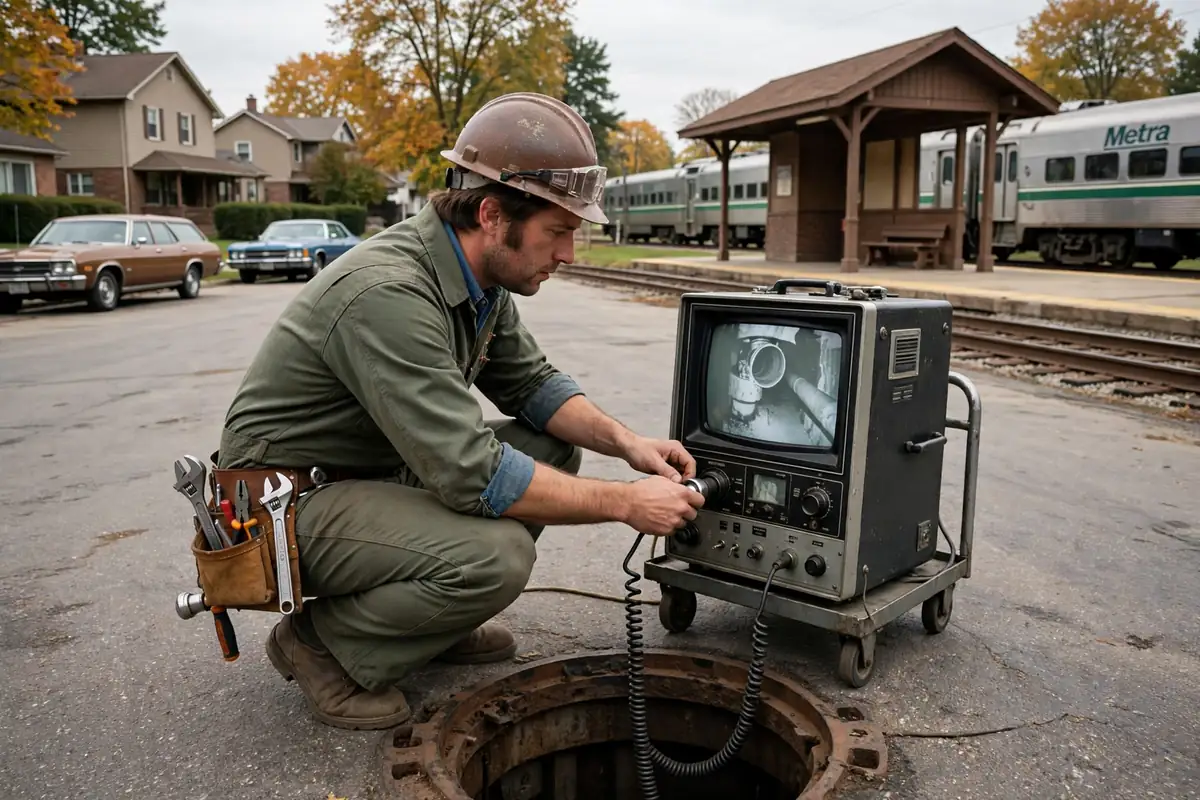
In short: Sewer maintenance in Palatine, IL 60067 is preventive care for your lateral — regular inspections and cleanings that keep 1960s-70s clay tile and Orangeburg laterals serving 1960s-70s subdivisions flowing freely. Call (833) 713-2101 to start with a baseline camera inspection; the footage becomes your line's health record and sets the maintenance interval.
Sewer Maintenance in Palatine: What to Know
In Palatine, sewer maintenance borrows its logic from every other system you already maintain. You service the furnace before winter and the car before the road trip; the Palatine lateral serving your 1960s-70s subdivisions in Palatine deserves the same foresight. 1960s-70s clay tile and Orangeburg laterals near downtown Palatine and the Metra station do not fail without warning — they send years of small signals that only a camera on a schedule will catch.
In Palatine, what a plan actually includes is straightforward: a baseline inspection to learn your line, periodic camera rechecks to watch known weak spots, preventive jetting before buildup becomes blockage, and root management timed to the growing season. Palatine homeowners get priority scheduling and a documented history that pays off at resale — buyers love a sewer line with records.
Signs You Need Sewer Maintenance in Palatine
Some Palatine properties need maintenance more than others. 1960s-70s subdivisions with 1960s-70s clay tile and Orangeburg laterals near downtown Palatine and the Metra station should take these as their cue to get on a plan.
Sump and stormwater tied near the lateral
Where sump discharge or storm ties run close to 1960s-70s clay tile and Orangeburg laterals near downtown Palatine and the Metra station, seasonal water loads stress the system. Maintenance visits for Palatine 1960s-70s subdivisions check those interactions — because backups blamed on the Palatine lateral are sometimes born beside it.
Recurring slow drains between cleanings
If your 1960s-70s clay tile and Orangeburg laterals slow down noticeably in the months after each cleaning, the interval is telling you something. A maintenance plan for Palatine 1960s-70s subdivisions near downtown Palatine and the Metra station formalizes that interval — scheduled jetting before the slowdown, not after.
An HOA or shared building sewer
Shared laterals serving 1960s-70s subdivisions in Palatine near downtown Palatine and the Metra station fail as a system, not per unit — which makes association-level maintenance the rational approach. Scheduled camera surveys and jetting protect every unit on the 1960s-70s clay tile and Orangeburg laterals at once.
It's been years since anyone looked
In Palatine, a lateral installed or last serviced a decade ago is an unknown, not a known-good. For 1960s-70s subdivisions in Palatine on 1960s-70s clay tile and Orangeburg laterals, the baseline camera inspection that starts a maintenance plan is often the first look anyone has had — and what it finds sets everything else.
A finished basement below the line
In Palatine, where the basement is finished, a backup is a renovation — drywall, flooring, belongings. Palatine homeowners near downtown Palatine and the Metra station with finished lower levels over 1960s-70s clay tile and Orangeburg laterals buy maintenance as insurance against the most expensive kind of sewer failure.
A home purchase or sale on the horizon
In Palatine, buyers increasingly ask for sewer camera footage, and sellers with records close faster. Starting maintenance on 1960s-70s clay tile and Orangeburg laterals before listing your Palatine 1960s-70s subdivisions near downtown Palatine and the Metra station builds the documentation file that answers every buyer's question.
How Sewer Maintenance Works in Palatine
Root management is the seasonal heart of most Palatine plans. 1960s-70s clay tile and Orangeburg laterals under 1960s-70s subdivisions near downtown Palatine and the Metra station face their heaviest root pressure in spring and early summer, so cutting and treatment are timed to meet the growth — not six months later when the mat has already formed. Between visits, the plan also covers what goes down your drains, because maintenance depends on the household not feeding the problem between visits.
Maintenance starts with a baseline — a full camera inspection of your 1960s-70s clay tile and Orangeburg laterals that becomes the reference for every visit after. The Palatine technician records material, joints, depths, and any defects on your Palatine lateral near downtown Palatine and the Metra station, and you keep the footage. That first look is what separates a plan from a guess: the schedule is built around what your line actually looks like, not what average lines do.
On schedule, the Palatine technician returns for the recheck: camera through the same access, comparing the live picture against the baseline. New root hairs at a joint get cut before they mat; fresh grease film gets jetted before it hardens; a joint that shifted since last year gets flagged for watching. For 1960s-70s subdivisions in Palatine, most visits are short and uneventful — which is precisely the product being sold.
What Makes Sewer Maintenance Different in Palatine
Area Facts
- Housing stock
- 1960s-70s subdivisions
- Sewer laterals
- 1960s-70s clay tile and Orangeburg laterals
- Soil
- silty clay loam near creek flood zones
- ZIP served
- 60067
In Palatine, maintenance plans are shaped by whole subdivisions of clay tile and Orangeburg aging out together. A generic annual visit would miss the point here — the schedule has to account for how this specific failure mode behaves on 1960s-70s subdivisions lots near downtown Palatine and the Metra station. That might mean spring root work, fall pre-winter checks, or camera intervals tightened around the known weak stretches of your 1960s-70s clay tile and Orangeburg laterals.
In Palatine, creekside infiltration near the Buffalo Creek headwaters changes what maintenance looks like in practice. For 1960s-70s subdivisions in Palatine, the plan has to work within that reality — coordinating access, protecting interiors, or covering shared systems rather than single laterals. The 60067 crews that do this weekly have the choreography down; your job is just to be on the calendar.
Palatine maintenance plans follow the ground's calendar, because silty clay loam near creek flood zones near downtown Palatine and the Metra station heaves every winter and settles every spring. Sewer Maintenance visits in Palatine are timed to that cycle, with a camera confirming the ground did not move the Palatine pipe.
Our Sewer Maintenance Process in Palatine
Baseline camera inspection
In Palatine, the full lateral is mapped and recorded — material, joints, defects, depths. This footage of your 1960s-70s clay tile and Orangeburg laterals becomes the reference every future visit in Palatine is measured against.
Custom maintenance schedule
Based on the baseline of your Palatine line, you get a written interval: what gets checked, what gets cleaned, and when. 1960s-70s subdivisions in Palatine near downtown Palatine and the Metra station get a cadence matched to their line, not a one-size package.
Scheduled preventive visits
In Palatine, camera rechecks and preventive jetting happen on the calendar — before buildup becomes blockage in your Palatine 1960s-70s clay tile and Orangeburg laterals. Most visits are quick; all are documented.
Seasonal root management
In Palatine, root cutting and treatment are timed to the growing season around your 1960s-70s subdivisions near downtown Palatine and the Metra station — meeting Palatine root pressure when it happens, not after.
Annual condition review
In Palatine, once a year you get the plain-English summary: what changed, what is stable, what to watch in your 1960s-70s clay tile and Orangeburg laterals. No surprises — that is the entire point for Palatine homeowners.
Priority scheduling
In Palatine, plan members jump the queue. If something urgent happens between visits at your Palatine 1960s-70s subdivisions, one call to (833) 713-2101 gets a technician dispatched with your line's history already on file.
In Palatine, every maintenance visit ends the same way: with footage proving your line is healthy and a date for the next look. Across Palatine, 60067, 1960s-70s subdivisions on plans spend their plumbing budget on prevention instead of emergencies. To get your 1960s-70s clay tile and Orangeburg laterals on a schedule, call (833) 713-2101 any time.
Sewer Maintenance in nearby areas
More services in Palatine
Sewer Line Cleaning
Often booked with Sewer Maintenance in Palatine.
Learn moreSewer Line Installation
Good with Sewer Maintenance in Palatine.
Learn moreSewer Line Replacement
Often booked with Sewer Maintenance in Palatine.
Learn moreTree Root Removal
Pairs well with Sewer Maintenance in Palatine.
Learn moreTrenchless Sewer Repair
Often booked with Sewer Maintenance in Palatine.
Learn moreSewer Maintenance in nearby areas
Sewer Maintenance in Vernon Hills
Also serving Vernon Hills 60061.
Learn moreSewer Maintenance in Canterbury Fields
Also serving Canterbury Fields 60089.
Learn moreSewer Maintenance in Mill Creek
Mill Creek 60089 service area.
Learn moreSewer Maintenance in Woodlands of Fiore
Now booking in Woodlands of Fiore 60089.
Learn moreSewer Line Problems Don’t Wait. Neither Should You.
Call now and reach a local sewer line specialist serving Buffalo Grove, IL and nearby northwest suburbs — 24/7.
(833) 713-2101Free to call · No obligation · 24/7 emergency line
Frequently Asked Questions
How often will you visit my Palatine home?
The baseline inspection sets the interval. 1960s-70s subdivisions on 1960s-70s clay tile and Orangeburg laterals near downtown Palatine and the Metra station with aggressive roots might see us each spring; quieter lines might need only an annual or biennial check. The schedule is written down after the first camera look at your specific lateral — and adjusted any time the footage shows the line needs more or less attention.
Can you maintain a shared HOA building sewer in Palatine?
That is a practical use of a plan. Shared 1960s-70s clay tile and Orangeburg laterals serving 1960s-70s subdivisions near downtown Palatine and the Metra station are maintained at the system level — scheduled camera surveys of the building sewer plus preventive jetting — coordinated with the association rather than individual units. Creekside infiltration near the Buffalo Creek headwaters, so the agreement is structured for how decisions actually get made here.
Do root treatments harm my trees in Palatine?
In Palatine, no — treatments target roots inside the pipe, not the tree. The foaming agents used on 1960s-70s clay tile and Orangeburg laterals near downtown Palatine and the Metra station kill only the root hairs that entered the sewer; the tree itself, standing in your Palatine yard, is unaffected. Mechanical cutting is even more selective: it removes what is in the pipe and nothing else.
What does a sewer maintenance plan include in Palatine?
Three things on a schedule: camera inspections to watch your 1960s-70s clay tile and Orangeburg laterals, preventive hydro-jetting to clear what the camera finds, and root management timed to the growing season around your 1960s-70s subdivisions near downtown Palatine and the Metra station. Every visit is documented with footage, and once a year you get a plain-English condition summary. It is preventive care, not a repair contract — the goal is never needing the emergency line.
Will maintenance prevent all backups in Palatine?
In Palatine, it prevents the preventable ones — which are most of them. Scheduled care keeps 1960s-70s clay tile and Orangeburg laterals clear of the grease, scale, and roots that cause the large majority of backups in Palatine 1960s-70s subdivisions. What it cannot stop is sudden structural failure or a city main surcharge; but with dated footage on file near downtown Palatine and the Metra station, even those events get diagnosed and resolved faster.
Can I cancel or change the schedule?
Any time. The plan serves your 1960s-70s subdivisions in Palatine — if the baseline shows your 1960s-70s clay tile and Orangeburg laterals need less frequent attention, the interval stretches; if life changes, the schedule changes with it. One call to (833) 713-2101 adjusts everything near downtown Palatine and the Metra station.
Serving Palatine, IL 60067